
What a Tripping Safety Switch Is Telling You
If your safety switch keeps tripping, your home is doing exactly what it is meant to do: cutting the power because it has detected electricity leaking where it should not. Most of the time the cause is a single faulty appliance. Sometimes it is moisture, ageing wiring, or simply too much plugged into one circuit. The trick is to find the cause safely, and to know when it is time to call a licensed electrician rather than keep resetting it.
This guide explains what your safety switch is telling you, the common reasons it trips, a simple and safe way to find the culprit yourself, and the warning signs that mean you should book an electrician fast.
“Only safety switches save lives.“, Queensland Electrical Safety Office
What your safety switch actually does
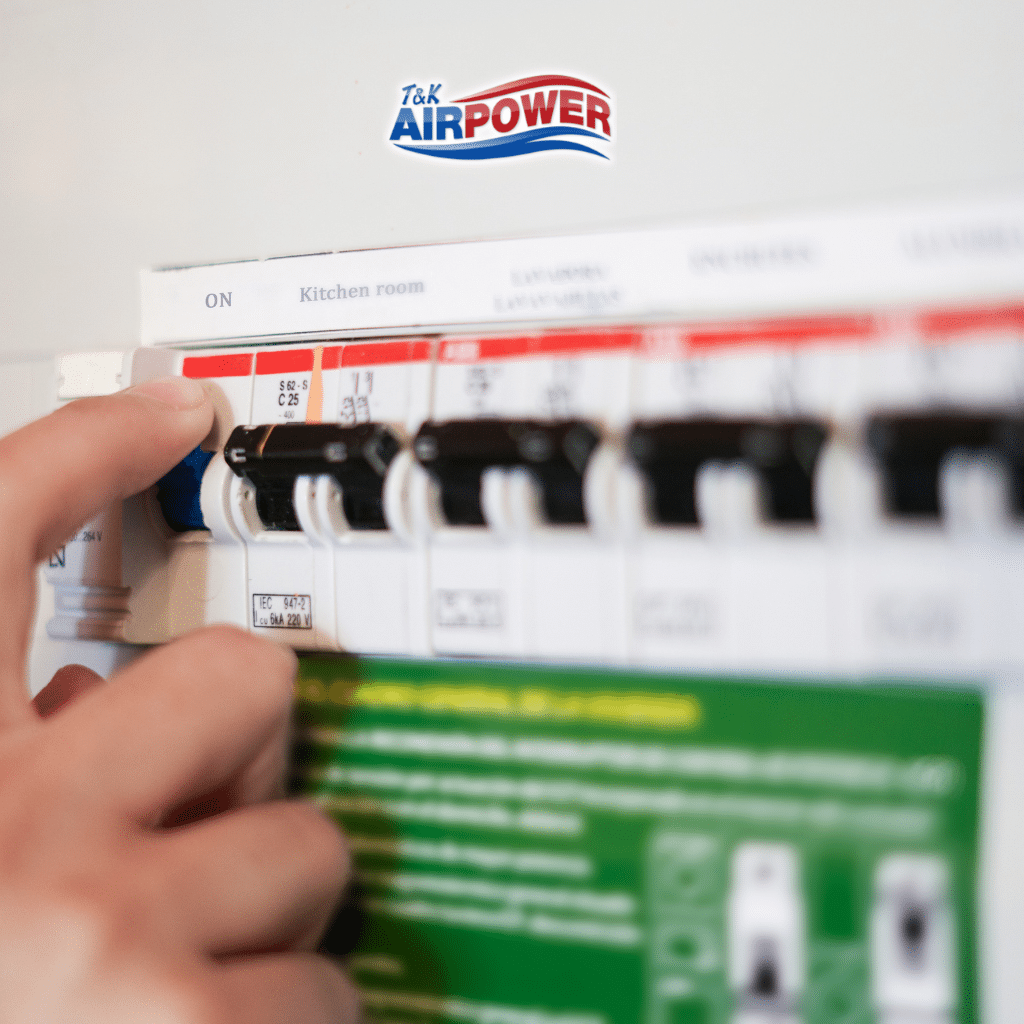
A safety switch, also called an RCD (residual current device), constantly compares the electricity flowing out to your circuits with the amount flowing back. If even a small amount is escaping to earth, for example through a faulty appliance or a person, it shuts the power off in a fraction of a second to prevent an electric shock.
This is different from a circuit breaker or a fuse, which protect against overloads and short circuits. According to South Australian government safety guidance, a safety switch turns off the supply within about 0.03 of a second when it senses a leak, and only safety switches protect people from electric shock. If you are not sure which is which on your board, our guide to the difference between fuses, circuit breakers and RCDs breaks it down.
So a tripping safety switch is not a fault in itself. It is the safety system working, and it is worth taking seriously.
The common reasons a safety switch keeps tripping
- A faulty appliance. This is the most common cause by far. A worn heating element, a failing motor or a damaged cord can leak current and trip the switch. A common example: the kettle or toaster that trips the power every time you turn it on.
- Moisture or water getting in. Rain into an outdoor power point, steam in a bathroom, or water in a light fitting can all cause leakage, especially after a storm.
- Damaged or ageing wiring. Wiring degrades over decades, and can be chewed by rodents or damaged by old fittings, creating an earth fault. Faulty wiring only gets worse if it is ignored.
- Too many appliances on one circuit. Several appliances running at once can each leak a tiny amount, which adds up and trips the switch (often called nuisance tripping).
- A faulty safety switch. RCDs do not last forever. An ageing or failed switch can start tripping on its own or refuse to reset.
- Storms and power surges. A nearby lightning strike or supply surge can trip the switch and occasionally damage it.
How to find the culprit safely
You can safely narrow down a faulty appliance yourself without touching any wiring. Here is the method electricians use:
- Unplug everything on the affected part of the home, and switch off hardwired items like the oven or air conditioner at the wall where you can.
- Reset the safety switch at your switchboard.
- If it holds, plug appliances back in one at a time, waiting a moment after each one.
- The appliance that trips it is the likely culprit. Stop using it and have it repaired or replaced before plugging it back in.
Important: only ever reset the switch and unplug appliances. Never open the switchboard or attempt any wiring yourself. In Australia, electrical work must be carried out by a licensed electrician, both for your safety and to keep your home insurance valid.
When to call an electrician fast
Book a licensed electrician promptly if:
- The safety switch will not reset, even with everything unplugged.
- It trips with nothing plugged in, which usually points to a wiring or switch fault.
- You notice a burning smell, scorch marks, or buzzing at the switchboard or a power point (classic signs of an electrical fault).
- It started after water got in, or trips repeatedly or randomly.
- You have no power at all to part of the home (see our guide on no power at home).
These point to a fault in the wiring or the switch itself, which needs a professional to trace and repair safely. The sooner it is looked at, the smaller the job usually is.
Could it be the switch or switchboard itself?
If your home is older, the safety switch or the whole switchboard may simply be ageing. Safety authorities recommend testing your safety switch every three months by pressing the test button, and having it checked if it does not click off when you do. An older board with limited or no safety switch protection is worth upgrading, both for safety and reliability. Our team can assess your switchboard and tell you honestly whether it needs attention.
Get it sorted fast
A safety switch that keeps tripping is stressful, especially when it is knocking out the fridge or the lights with a busy household to run. Our licensed electricians find the fault quickly and fix it properly, so you are not left guessing or resetting the board all night. Electrical fault finding starts at a $99 call-out, then a fixed price before any work goes ahead, so there are no surprises. Call us on 08 8296 7888 or contact us online to book a fast electrical repair.
T&K Airpower has kept Adelaide homes safe and comfortable since 1996. Our licensed, repair-first electricians are here to fix it fast and fix it right, with no surprises.
Frequently Asked Questions
Why does my safety switch keep tripping?
Because it has detected electricity leaking to earth and is cutting the power to protect you. The most common cause is a faulty appliance, followed by moisture, damaged or ageing wiring, an overloaded circuit, or a failing safety switch.
Is it safe to keep resetting a tripping safety switch?
Resetting it once to test is fine, but if it keeps tripping, do not just keep resetting it. The switch is warning you of a real fault. Find the cause, and if it will not stay on, call a licensed electrician.
Why does my safety switch trip when nothing is plugged in?
That usually points to a fault in the fixed wiring or the safety switch itself rather than an appliance. This needs a licensed electrician to trace and repair.
Can a faulty appliance really trip the whole house?
Yes. A single appliance with a leak to earth, such as an old kettle, heater or washing machine, can trip the safety switch for its whole circuit. Unplugging appliances one by one is the fastest way to find it.
Can rain or moisture cause my safety switch to trip?
Very often, yes. Water in an outdoor power point, a light fitting or a bathroom can let current leak to earth, which is why many switches trip during or after a storm.
How do I find which appliance is tripping it?
Unplug everything on the affected area, reset the switch, then plug items back in one at a time. The appliance that trips it is the likely culprit. Stop using it until it is repaired or replaced.
What is the difference between a safety switch, a circuit breaker and a fuse?
A safety switch (RCD) protects people from electric shock by detecting leakage to earth. Circuit breakers and fuses protect the wiring from overload and short circuits. You need both kinds of protection, which is why we explain them in our guide to fuses, circuit breakers and RCDs.
How often should I test my safety switch?
Safety authorities recommend testing it about every three months by pressing the test button on the switchboard. If it does not click off, or will not reset afterwards, have it checked by an electrician.
Written by Oliver Hastings on 22 June 2026. Last updated June 2026.