


Home / Blog /

Written by Oliver Hastings on 18 November 2026
Is Your Ducted Air Conditioner Leaking Water? A Drain Rectification in Woodside
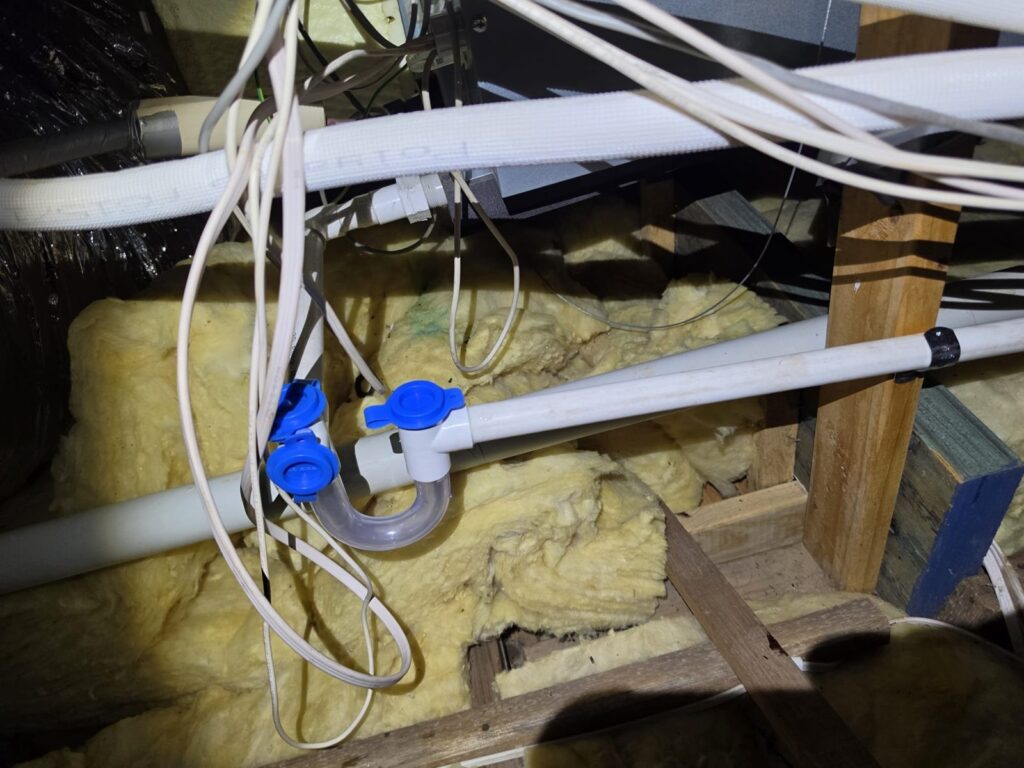
A ducted air conditioner leaking water can often be traced to the condensate drain, the pipework that carries moisture away from the indoor unit in your roof space. During a routine service in Woodside, we found the main drain required full replacement. We ran new 20mm PVC pipe, fitted a serviceable P-trap, confirmed the falls, and flushed the system through. The outcome recorded by the technician: found ok.
The Job In Brief
- System: not recorded
- Suburb: Woodside, South Australia
- Symptom reported: General service and tune-up
- What we found: Main drain requiring rectification
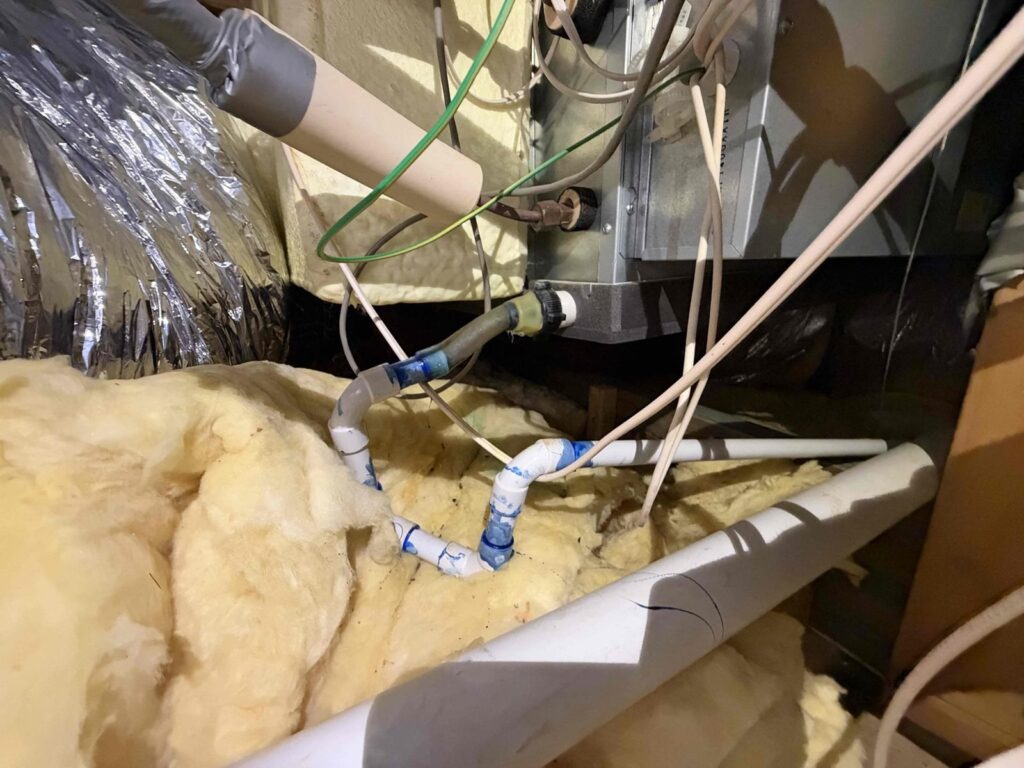
- Fix: New 20mm main drain run, serviceable P-trap installed, falls confirmed, flushed with water and found ok
- Price guide: $1,000 to $1,500 inc GST for drain rectification; $290 for the ducted service (correct at 17 November 2026)
- Outcome: New drain installed and tested
The Fault
The customer booked a general service and tune-up of their ducted unit. During that visit we serviced the unit and assessed the drain system, finding that the main drain required rectification. We issued a quote to replace the main drain including the trap, using new PVC pressure pipe and a PVC drain trap. The customer approved the quote on the same day.
Drain issues on ducted systems do not always announce themselves with visible water on a ceiling. Because the indoor unit sits in the roof cavity, water can pool for some time before it stains plasterboard. Finding a drain fault during a routine annual service is a considerably cheaper outcome than finding it after ceiling damage has occurred.
What We Tested
Drain assessment is part of a standard ducted service. To understand why the drain matters, it helps to know how it works. As a ducted system cools and dehumidifies the air in your home, moisture condenses on the indoor coil and collects in a drain pan beneath the unit. That water has to get out of the ceiling cavity through a drain pipe, and on most ducted systems the drain connects on the return-air side of the indoor unit, which is under negative pressure while the fan runs.
The practical consequence of that negative pressure is that the fan’s suction works against the drain opening, pulling air back up the pipe rather than letting water flow out. A correctly installed P-trap, a U-shaped section of pipe, holds a column of water that acts as a seal against that suction. Industrial Monitor Direct’s guide to condensate drain design for negative-pressure HVAC systems explains it this way: the trap seal height must equal or exceed the fan’s static pressure, and without a properly sized trap, negative pressure draws air up the drain pipe rather than allowing condensate to drain, with the result that water backs up into the ductwork and can reach the ceiling lining.
For more background on how ducted drain systems are configured and what can go wrong with them, see our own tech talk on ducted air conditioning drains.
On the repair visit, two specific checks were carried out once the new drain was in place. First, we checked the falls, meaning we confirmed the gradient of the new pipe run so that water would move away from the indoor unit by gravity toward the discharge point. Second, we flushed the system with water to verify that drainage was free and unobstructed. The technician recorded the result as: found ok.
How We Fixed It
We ran a new 20mm main drain from the indoor unit using PVC pressure pipe. A serviceable P-trap was fitted to the new drain line and connected to the unit. A serviceable trap is designed so that the trap body can be accessed and inspected at a future service without cutting pipe, which makes it easier to check the water seal is intact each year.
Materials used:
- Three lengths of 3.9m PVC pressure pipe, 20mm
- PVC drain trap (serviceable P-trap)
With the new run connected, we checked the falls along the full length and flushed with water to confirm drainage. The price guide for this repair is $1,000 to $1,500 inc GST, correct at 17 November 2026. The initial ducted service, during which the fault was identified, was $290.
| Stage | What we did | What it showed |
|---|---|---|
| Service visit, 10 Nov 2026 | Serviced unit, assessed drain system | Main drain required rectification; quote issued |
| Quote approved, 10 Nov 2026 | Customer approved drain rectification quote | Repair booked |
| Repair visit, 17 Nov 2026 | Ran new 20mm main drain, installed serviceable P-trap, connected to unit | Falls confirmed correct |
| Verification | Flushed with water | Found ok |
Key Takeaways
- Water marks near ceiling vents or the return-air grille are worth investigating promptly. On a ducted system, by the time water is visible on plasterboard, it has usually been sitting in the roof cavity for a while. Book a service rather than wait.
- A P-trap is not optional on a negative-pressure drain. Without a water seal in the trap, the fan’s suction works against the drain and condensate backs up. This is a component check that belongs in every ducted service.
- Gradient matters as much as the trap. Even with a correctly installed P-trap, a drain pipe without enough downhill fall will hold water rather than shed it. On this job we checked the falls after running the new pipe to confirm the gradient before flushing.
- What you can safely check yourself: rinse or replace the return-air filter, keep the area around the return-air grille clear, and listen for unusual dripping sounds from the ceiling cavity. Everything inside the roof space, including the drain, the trap, and the indoor unit, is a job for a licensed technician.
- Adelaide roof spaces add thermal stress to every component in the ceiling cavity. According to energy efficiency guidance on roof space temperatures, Australian roof spaces can reach 60 to 70 degrees Celsius in summer. PVC drain pipework and trap assemblies are exposed to that heat cycling season after season, which is one reason drain condition is worth checking at each annual service rather than leaving it indefinitely.
The Resolution
We ran a new 20mm main drain with a serviceable P-trap, connected it to the indoor unit, confirmed the falls, and flushed with water. The outcome recorded by the technician: found ok. No further work was found or quoted during the repair visit.
If your ducted system has not been serviced recently, or if you have noticed any moisture near ceiling vents or the return-air grille, an annual service is the most cost-effective way to find drain and drain-related issues before they cause water damage. For anyone weighing up whether repair or replacement makes more sense for their system, our repair or replace calculator is a useful starting point.
“The drain is the part of a ducted system that homeowners rarely see and rarely think about until there is water on the ceiling. A serviceable trap and a correctly graded run cost a fraction of what a ceiling repair will set you back.” Oliver Hastings, T&K Airpower
Frequently Asked Questions
Why is my ducted air conditioner leaking water?
The most common cause is a problem with the condensate drain, the pipe that carries moisture away from the indoor unit in the roof space. Issues include insufficient pipe gradient, a missing or failed P-trap, deterioration of the drain pipework, or a blockage. A technician can assess the drain during a service call. If water is showing on your ceiling, switch the system off and call for an assessment rather than continuing to run it.
What is a P-trap on a ducted air conditioner drain?
A P-trap is a U-shaped section of pipe fitted to the condensate drain. It holds a small column of water that acts as a seal, preventing the indoor fan’s suction from drawing air back up the drain pipe. On most ducted systems, where the drain connects on the negative-pressure side of the unit, a correctly sized and installed P-trap is essential for the drain to function. A serviceable P-trap has removable caps so the trap body can be inspected and cleaned at a future service without cutting pipe.
How much does ducted air conditioner drain rectification cost in Adelaide?
As a guide, replacing a main drain including the P-trap on a ducted system typically falls in the range of $1,000 to $1,500 inc GST, correct at 17 November 2026. The price varies depending on access, the length of pipe run required, and what is found on the day. A ducted service, during which drain problems are often first identified, is $290. We quote before we work and the quote is approved before anything is ordered or installed.
Can I still run my ducted air conditioner if the drain is leaking?
If you can see water staining, moisture, or a damp smell near ceiling vents or the return-air grille, switch the system off and book an assessment. Continuing to run the unit risks water damage to your ceiling lining, insulation, and the indoor unit itself. Our air conditioner repairs page covers what a fault assessment involves and what to expect from the process.
How often should a ducted air conditioner be serviced?
An annual service is the standard recommendation. For Adelaide homes where the system is used heavily through summer, a service in spring, before the cooling season, gives you the opportunity to identify drain, filter, and airflow issues before they become faults in peak heat. This job is a good example: the drain problem was found during a routine tune-up, not because water was already on the ceiling. See our air conditioner service page for what a ducted service covers.
What does drain rectification mean on an air conditioner?
Drain rectification means repairing or replacing part or all of the condensate drain system, including the pipe run and the P-trap. It may involve re-routing the drain to achieve the correct fall, replacing aged or deteriorated pipework, or fitting a serviceable trap where none existed previously, or where an existing trap was not performing. The scope and cost depend on what the technician finds when the drain is inspected.
Why is drain maintenance more important in Adelaide than some other climates?
Adelaide’s roof spaces can reach 60 to 70 degrees Celsius in summer. Every component installed in the ceiling cavity, including the indoor unit, ducts, and drain pipework, is exposed to that heat over the life of the system. The thermal cycling, season after season, places ongoing stress on materials. That is one reason drain condition is worth checking at each annual service rather than leaving it until a problem appears. For more on how Adelaide conditions affect ducted systems, see our page on ducted air conditioning in Adelaide.
Need Help?
If your ducted system is due for a service, or you have noticed any sign of moisture near your ceiling vents or return-air grille, call us on 08 8296 7888 or use our online booking form.
T&K Airpower has been servicing Adelaide homes since 1996. We hold refrigerant handling licences, are authorised warranty agents for Mitsubishi Electric, Temperzone, and Hitachi, and our starting position on every job is to repair before replace.
