


Home / Blog /

Written by Oliver Hastings on 20 November 2026
Ducted Air Conditioner Condensate Drain Repair: What a Ridgehaven Pre-Purchase Service Found
A ducted air conditioner condensate drain repair and minor duct seal made up most of the work on this Ridgehaven, Adelaide job, though the homeowner had no visible symptoms at the time of booking. The system appeared to function normally, but a standard service ahead of summer revealed that the condensate drain had been routed through an electrical conduit rather than a dedicated drain pipe, and that one supply air duct was not sealed at its connection point.
The Job In Brief
- System: Mitsubishi Electric ducted split system
- Suburb: Ridgehaven, Adelaide
- Reason for visit: Pre-purchase service; no reported faults
- What we checked: Heating and cooling operation, indoor and outdoor unit condition, ductwork and zone operation, filters and drain
- Faults found: Condensate drain run through electrical conduit (not a drain pipe); supply air duct not sealed at connection
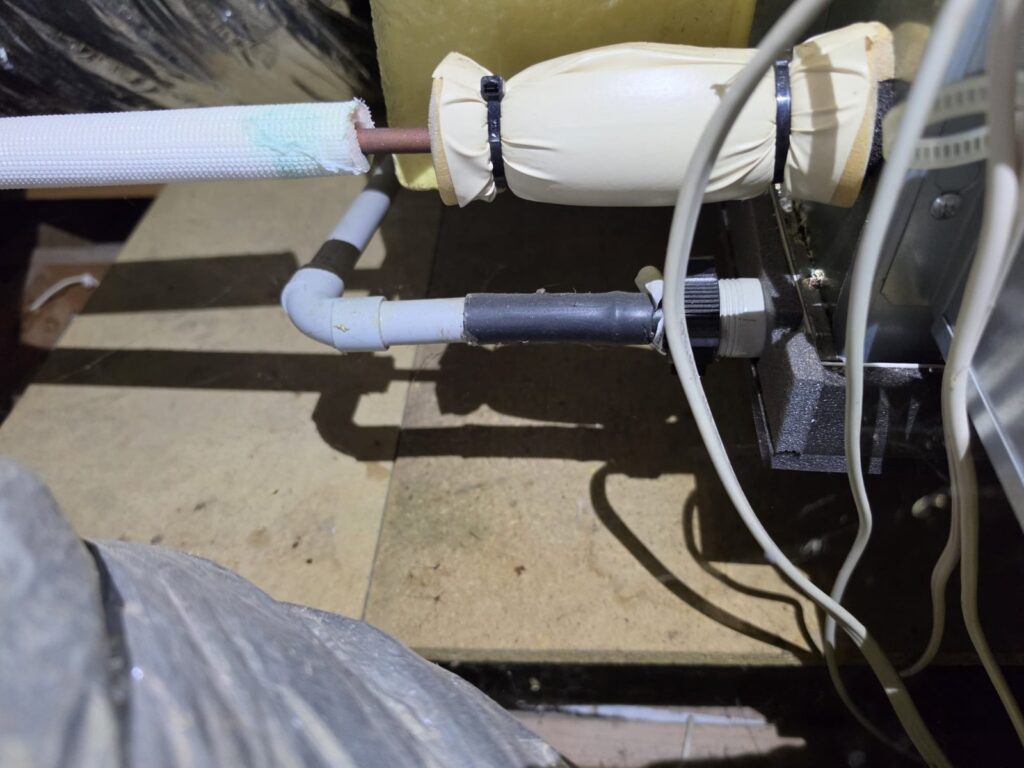
- Fix: New 20mm PVC drain pipe run to the gutter with a serviceable P-trap; supply air duct resealed
- Price guide for the repair: About $1,500 to $2,000 inc GST, correct at 19 November 2026 (the ducted service was separately $290)
- Outcome: Drain tested with water; operation tested and found ok
The Fault
The homeowner had just purchased the property and booked a ducted service to check the system before the Adelaide summer. No specific faults had been noticed. The technician carried out a general service of the Mitsubishi Electric ducted unit, testing heating and cooling, checking the indoor and outdoor unit, inspecting the ductwork and zone operation, and cleaning the filters.
Two things came up. First, the condensate drain from the indoor unit had been run through an electrical conduit rather than a drain pipe. The conduit was undersized for drainage and had no serviceable P-trap in line. Second, a supply air duct was not sealed at its connection point. Both items were noted, quoted on the same day, and approved for repair.
What We Tested
- Heating and cooling modes
- Indoor unit condition
- Outdoor unit condition
- Ductwork and zone operation
- Drain line
- Filters (cleaned)
The drain inspection is a routine part of a ducted service. A ducted indoor unit produces condensate whenever it runs in cooling mode: the evaporator coil draws moisture out of the warm return air, and that water collects in a drain pan beneath the coil. From there it must leave the unit through a drain line. When the drain line cannot handle the volume, the pan fills and water finds its own path out, which in a ceiling-mounted ducted system is usually through the ceiling itself.
On this job, the drain had been routed through an electrical conduit rather than a dedicated drain pipe. The existing arrangement was also undersized. A condensate drain line benefits from a P-trap, a U-shaped bend in the pipe that holds a small water seal at the base of the drain connection. AAON, a commercial HVAC equipment manufacturer, describes the P-trap as serving two roles: facilitating condensate drainage and preventing the indoor unit’s fan from drawing air back through the drain opening. Without that water seal in place, the fan can pull air in through the drain rather than allowing water to flow out, which compromises drainage and can contribute to overflow.
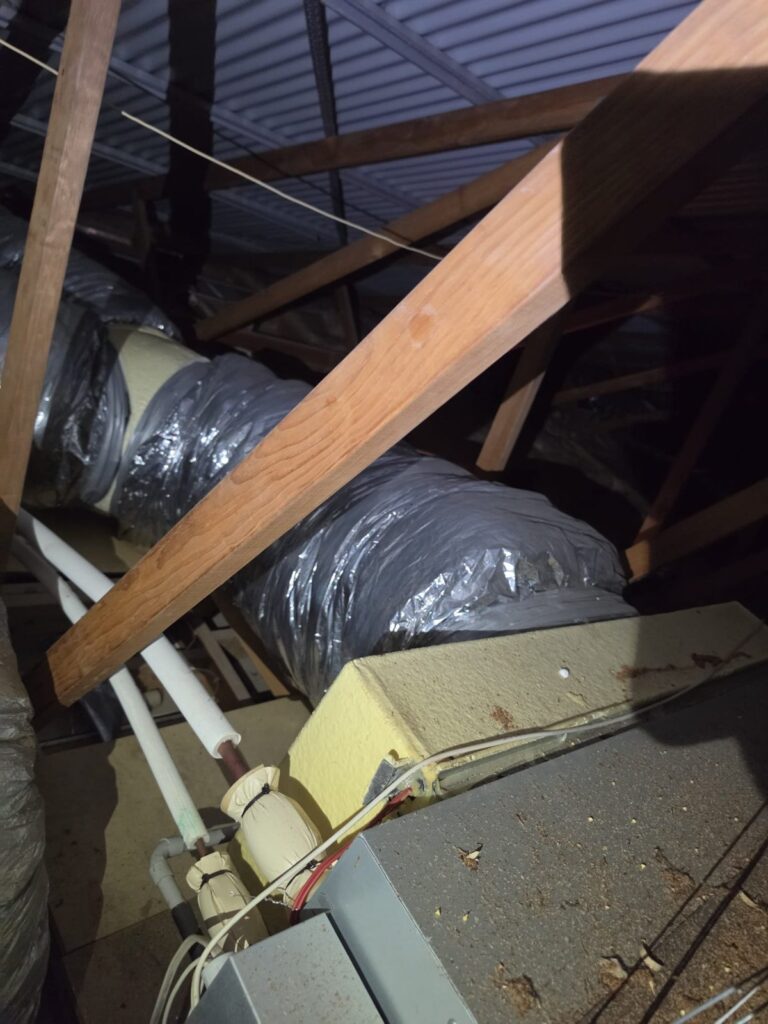
The duct check found that a supply air duct connection was not sealed. Supply ducts carry conditioned air from the indoor unit to the outlets around the house. A gap at a connection means air escapes into the roof space before it reaches the room. National Construction Code 2022 requires larger ductwork systems to be sealed against air loss in accordance with Australian Standard AS 4254, which covers ductwork construction and sealing. For any ducted system, the same principle applies: air that escapes into the roof space is air that never reaches its destination. In Adelaide, roof space temperatures can exceed 60 degrees Celsius in summer, so cooled air escaping into the ceiling cavity is effectively wasted.
How We Fixed It
On the return visit, we disconnected the existing drain line, ran a new 20mm PVC drain pipe from the indoor unit to the gutter, and installed a serviceable P-trap. A serviceable P-trap has an accessible cleanout point, which makes future maintenance straightforward rather than requiring the line to be cut open. We sealed the drain connection and tested it by running water through the new line. We then resealed the supply air duct connection and tested operation. The system was found ok.
Parts and work supplied:
- New main condensate drain line, 20mm PVC pipe run to the gutter
- Serviceable PVC drain P-trap
- Minor duct repair: supply air duct connection resealed
For more on how we approach a repair, see our air conditioning repairs page. For electrical work found during a ducted service, our domestic electrical repairs team handles that separately.
| Stage | What we did | What it showed |
|---|---|---|
| Visit 1: Service (10 Nov 2026) | General ducted service: tested heating and cooling, checked indoor and outdoor unit, checked ductwork and zones, cleaned filters, inspected drain | Drain run through electrical conduit, undersized, no P-trap; supply air duct not sealed at connection |
| Quote approved (11 Nov 2026) | Replace Main Drain Incl Trap and Minor Duct Repairs quoted and approved | Repair scope agreed |
| Visit 2: Repair (19 Nov 2026) | Disconnected existing drain; ran new 20mm PVC drain to gutter; installed serviceable P-trap; sealed drain; resealed supply duct; tested operation | Drain tested with water, confirmed draining; operation tested, found ok |
Key Takeaways
- A ducted service before an Adelaide summer checks things that are not visible from inside the house, including the drain line and duct connections. If the service report lists action items, it is worth having them attended to before the heat arrives.
- A condensate drain issue is not always obvious from indoors. If the drain cannot remove water fast enough, the first visible sign is often a water stain on the ceiling directly below the indoor unit. By that point, insulation and plasterboard above may already be wet. See our ducted air conditioning guide for more on how the system works.
- A serviceable P-trap has a removable cleanout section so the drain line can be flushed and inspected without tools beyond a bucket. If your existing drain has no accessible trap or inspection point, ask your technician to note it at the next service.
- Cleaning the return air filters yourself is straightforward and something most homeowners can do safely: remove the return grille, slide out the filter, rinse it, let it dry, and replace it. Everything else, including the drain, coil, duct connections, and refrigerant circuit, is for a licensed technician.
- A supply duct gap means conditioned air is escaping into the roof space rather than reaching the room. The system runs harder and longer to compensate, and the gap is not visible from inside the house without an inspection of the ceiling cavity.
The Resolution
At the end of the repair visit, the new drain was tested with water and confirmed to be draining correctly. The supply air duct connection was resealed. Operation was tested and found ok. No further work was found or recommended during the visit.
If you have recently purchased a property with an existing ducted system, a pre-summer service is a reasonable first step. Unsure whether to repair or replace your ducted system? Use our repair or replace calculator as a starting point.
“If you have just purchased a property with an existing ducted system, a service before summer is worth doing. It gives you a clear picture of what you have before you need to rely on it.” Oliver Hastings, T&K Airpower
Frequently Asked Questions
What is a condensate drain on a ducted air conditioner?
A ducted air conditioner running in cooling mode extracts moisture from the air as it passes over the cold evaporator coil. That moisture drips into a drain pan beneath the coil and exits through a drain line, usually to a gutter or drain point. The drain line must be correctly sized and fall continuously toward its outlet so that water leaves the system without backing up.
Why does the condensate drain need a P-trap?
A P-trap holds a small water seal at the base of the drain connection. The indoor unit’s fan creates lower pressure inside the cabinet. Without a water seal at the drain outlet, the fan can draw air back through the drain line rather than letting water flow out, which causes poor drainage. A correctly installed P-trap allows the drain to function as intended.
What is a serviceable P-trap?
A serviceable P-trap has a removable section or cleanout cap so the trap can be flushed and inspected without cutting the pipe. Drain lines can accumulate residue over time, and having an accessible cleanout means maintenance is straightforward rather than requiring a pipe cut or replacement.
What happens if the condensate drain backs up?
If the drain cannot remove water fast enough, the drain pan fills. When it overflows, water enters the ceiling cavity. Because the indoor unit on a ducted system sits above the ceiling, the first visible sign is often a water stain directly below the unit. Some units have a float switch that shuts the system off when the pan reaches a certain level; an unexplained shutdown on a hot day is worth having investigated.
What does a supply duct not sealed mean?
Supply ducts carry conditioned air from the indoor unit to the outlets in each room. If a connection in the supply duct is not sealed, air escapes into the roof space before it reaches the room. The room feels less comfortable than expected, the system runs longer to compensate, and the energy is wasted. The gap is not visible from inside the house without an inspection of the ceiling space.
How often should a ducted system be serviced?
Annually is a reasonable starting point, particularly before the main cooling season. A service checks the drain, coil condition, duct connections, filter, zone operation, and refrigerant circuit for signs of a leak. If you have recently purchased a property, a service is worth doing regardless of when the previous one was carried out, as it gives you a baseline for the system’s condition.
Can I check the condensate drain myself?
Cleaning the return air filter is a task most homeowners can handle safely. The drain line, coil, duct connections, and refrigerant circuit are for a licensed technician. If you notice water staining on the ceiling below the indoor unit, or the system shuts itself off for no apparent reason during hot weather, turn the system off and book a service rather than attempting to access the ceiling space yourself.
Need Help?
If your ducted system is due for a service, or you have been told the drain or ductwork needs attention, call us on 08 8296 7888 or use our contact page. T&K Airpower has been servicing and repairing air conditioning across Adelaide since 1996. We are licensed, we are authorised warranty agents for Mitsubishi Electric, Temperzone and Hitachi, and our approach is to repair first where it makes sense to do so.
