
What It Means When Your Air Conditioner Freezes Up
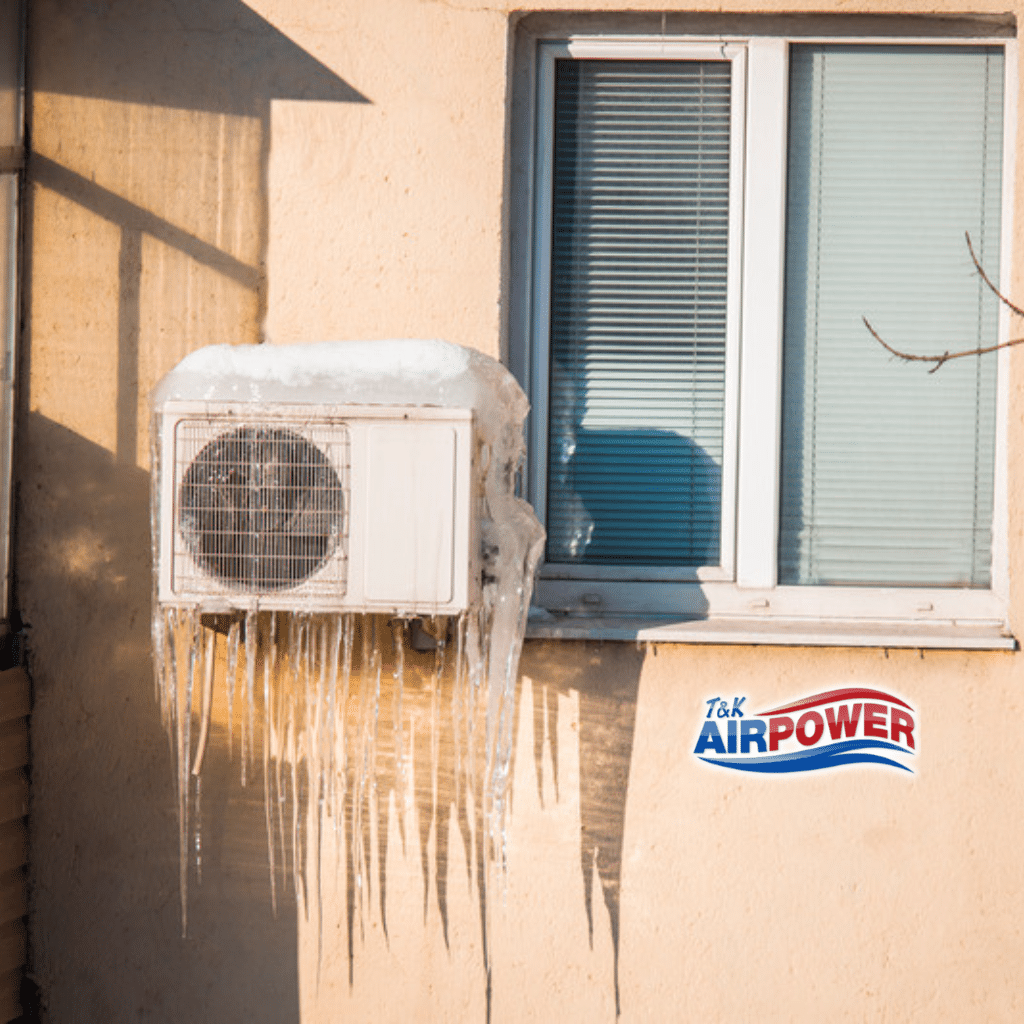
Is your air conditioner freezing up, with ice on the outdoor unit or the indoor coil? It happens in both seasons, for different reasons. Right now, in the middle of an Adelaide winter, by far the most common cause is the outdoor unit icing up in heating mode when it is cold and damp outside. In summer it is the indoor coil that freezes, usually from a dirty filter or low refrigerant. A little frost on the outdoor unit on a cold morning is often normal. Solid ice that will not clear, or a unit that stops heating, is not.
This guide explains the winter outdoor-unit icing you are most likely seeing now, the summer cooling-mode causes, what to do the moment you spot ice, and when it is a fault to book a licensed technician for.
Winter: Why Your Outdoor Unit Ices Up in Heating Mode
A reverse-cycle system heats your home by pulling warmth out of the outside air, so in winter the outdoor unit is doing the cold work. According to Mitsubishi Electric Australia, the outdoor heat exchanger drops to around 0°C or below, and moisture in the air freezes onto it. That is why you see frost or a layer of ice on the outdoor unit on a cold Adelaide morning.
Frost builds fastest in cold, damp conditions. When the air is moist and the dew point sits near or below 0°C, there is enough moisture about to deposit frost onto the sub-zero coil faster than in dry conditions, so the unit has to defrost more often. Older units, whose defrost controls and sensors are worn, are the ones that tend to struggle and ice up the worst.
The Defrost Cycle: Normal, Up to a Point
Your system is built to deal with this. It runs a defrost cycle: the indoor and outdoor fans stop while the compressor keeps running to melt the frost away. Mitsubishi Electric notes this takes around 10 minutes and can happen roughly every 40 minutes in cold weather. While it runs, the unit pauses heating and you may see steam rising from the outdoor unit. That steam is the ice melting, not a fault.
“Defrosting is a normal part of the heating operation and is not a fault with the product.“, Mitsubishi Electric Australia
So a short pause in heating, a stopped outdoor fan and a puff of steam every so often are all signs the defrost cycle is doing its job.
When Winter Icing Is a Fault (Often Older Units)
The problem is when the unit cannot keep up. Mitsubishi Electric advises that frequent defrosting or insufficient heat may be a sign of a fault or that maintenance is needed. Treat it as a fault to book if you notice:
- A solid block of ice on the outdoor unit that does not clear between cycles.
- Little or no warm air inside, even though the unit is running.
- The system defrosting almost constantly and never settling into steady heating.
- Ice creeping up the copper pipes or over the whole coil.
This is most common on older systems, where the defrost sensor, control board or reversing valve has worn out and the unit can no longer judge when and how to defrost. As authorised warranty agents, our technicians diagnose exactly which part has failed rather than guessing. If your heating has dropped off this winter, it is worth booking an air conditioner repair before the cold snap really bites.
Summer: Indoor Coil Freezing in Cooling Mode
The other half of the story is summer. In cooling mode the indoor coil is the cold one, and it freezes when not enough warm air moves across it, or when refrigerant is low. The main causes are:
- A dirty or blocked filter, by far the most common. A clogged filter starves the coil of warm air and it ices over. See our guide to air conditioning filters.
- Blocked vents, a dirty coil or a failing indoor fan, which choke airflow further along. A blocked outdoor unit can also drag things down, as covered in our outdoor unit airflow deep dive.
- Low refrigerant from a leak. When refrigerant is low the coil runs colder than it should and ices up. This is not a top-up job: the leak must be found and sealed first.
“A Refrigerant Handling Licence must be held by any person who carries out work in relation to refrigeration and air conditioning (RAC) equipment.“, Australian Refrigeration Council (ARCtick)
In short, the refrigerant side of a frozen aircon is always a job for a licensed technician, not a DIY fix.
First Thing to Do: Turn It Off and Let It Thaw
If the unit is iced up and not working properly, do not keep running it. Running a frozen system can damage the compressor, the single most expensive part. Follow these steps:
- Turn the system off (stop heating or cooling) so no more ice forms.
- Let it thaw fully. Do not chip or scrape the ice, as you can easily bend the coil fins. Melting can take a few hours, so put towels down for the water.
- In cooling mode, switch the fan to ON to move room-temperature air over the indoor coil and speed up the thaw.
- Check the filter and clean or replace it if it looks grey or clogged.
- Open any closed vents and make sure nothing is blocking airflow.
Once it has thawed, try running it again. If it ices straight back up, will not heat in winter, or will not cool in summer, that is your signal there is an underlying fault, the same as an aircon that will not work at all. A regular service and maintenance visit catches most of these problems early.
Can I Fix a Frozen Air Conditioner Myself?
Some of it, yes. The safe, homeowner-friendly jobs are:
- Thawing the unit by turning it off and waiting.
- Cleaning or replacing the filter.
- Opening blocked vents and moving furniture away from returns.
- Keeping the outdoor unit clear of leaves, snow-melt debris and clutter so it can breathe.
What you should leave to a professional is anything involving refrigerant, the defrost or sealed system, or electrical components.
Why You Should Never Keep Running a Frozen Aircon
A frozen system is working against itself. The ice blocks airflow, the compressor is forced to work harder against the restriction, and that can lead to expensive compressor failure. A struggling, iced-up unit also draws more current, which is one reason a faulty air conditioner can keep tripping your safety switch. If yours is tripping the power, treat it as a fault to diagnose, not a breaker to keep resetting.
Frozen Air Conditioner: Causes, Signs and Fixes at a Glance
| Cause | What you will notice | Fix and who does it |
|---|---|---|
| Winter frost and normal defrost (heating) | Light frost on the outdoor unit, brief steam, a short pause in heating | Normal. No action needed; the unit self-defrosts |
| Defrost fault, often an older unit | Solid ice that will not clear, little or no heat, constant defrosting | Diagnose defrost sensor, board or reversing valve (technician) |
| Dirty or blocked filter (cooling) | Ice on the indoor coil, weak airflow | Clean or replace the filter (DIY) |
| Low refrigerant, leak (cooling) | Ice on the copper pipes, poor cooling | Leak found, sealed and recharged (licensed technician) |
| Running cooling in cool weather | Indoor icing in mild conditions | Switch off cooling; use heating or fan instead (DIY) |
In a Nutshell
- In winter, light frost on the outdoor unit and a short defrost cycle are normal.
- Solid ice that will not clear, or no heat, is a defrost fault, most often on older units.
- In summer, a dirty filter is the number one cause, and the easiest to fix yourself.
- Low refrigerant means a leak, which by law only a licensed technician can repair.
- Never keep running a frozen unit. You risk costly compressor damage.
Frequently Asked Questions
Is it normal for my outdoor unit to ice up in winter?
Yes, some frost is normal. In heating mode the outdoor coil drops to around 0°C or below and moisture freezes on it, so the unit runs a defrost cycle to clear it. A solid block of ice that will not clear, or a loss of heating, is not normal and needs a repair.
Why does my heater stop and blow cold air for a few minutes in winter?
That is the defrost cycle. The unit briefly pauses heating, the fans stop and the compressor melts the frost off the outdoor coil. It usually lasts about 10 minutes. You may see steam, which is just the ice melting.
Why does my older air conditioner freeze up worse than it used to?
Older units often have worn defrost sensors or controls and cannot judge when to defrost, so ice builds faster than it clears. If heating has dropped off, book a technician to check the defrost system rather than running it iced up.
Why is my air conditioner freezing up in summer?
In cooling mode the indoor coil ices up when warm air cannot reach it, usually from a dirty filter or blocked vents, or from low refrigerant. Thaw the unit, check the filter, and if it freezes again, book a repair.
Can I just add more refrigerant myself?
No. Refrigerant is a controlled substance in Australia and must be handled by a licensed technician. Low refrigerant also means there is a leak that has to be found and sealed first, otherwise it will simply leak out again.
Should I keep using my air conditioner if there is ice on it?
If it is heating or cooling poorly with ice on it, switch it off and let it thaw. Continuing to run a frozen unit blocks airflow and overworks the compressor, which is the most costly part to replace.
Having Trouble With a Frozen Air Conditioner?
If your outdoor unit is iced solid, your heating has dropped off this winter, or the unit keeps freezing in summer, there is a fault that needs sorting properly. Our licensed Adelaide air conditioning technicians can find the cause fast, whether it is a defrost fault, airflow or refrigerant, and get your home comfortable again. Give our team a call on 08 8296 7888 or contact us online and we will be happy to help.
T&K Airpower has kept Adelaide homes comfortable since 1996. As an authorised warranty agent for Mitsubishi Electric, Temperzone and Hitachi, our licensed, repair-first team fixes the problem rather than rushing to replace your system.
By Oliver Hastings · Last updated June 2026
Is your air conditioner showing a fault code? Check what it means with our free fault code lookup, covering more than 1,000 codes across 15 brands sold in Australia.