


Written by Oliver Hastings on 26 October 2026
Reverse Cycle Air Conditioner Stopped Working After Wires Were Chewed in Blackwood
A reverse cycle air conditioner stopped working after the wires from the outdoor unit were chewed and shorted at the roof line at a Blackwood property. We attended on a $199 diagnostic, found the interconnecting cables needed re-running and the outdoor control PCB required replacement, then returned to complete both repairs. The system tested all okay.
The Job In Brief
- System: Reverse cycle air conditioner
- Suburb: Blackwood, South Australia
- Symptom: System stopped working; wires from the outdoor unit found chewed and shorted at the roof line
- What we inspected: Interconnecting cables and outdoor control PCB
- Findings: Cables required re-running; outdoor control PCB required replacement
- Fix: Interconnecting cables re-run; outdoor control PCB replaced
- Price guide: About $1,000 to $1,500 inc GST (correct at 19 October 2026)
- Outcome: Works completed as quoted; system tested all okay
The Fault
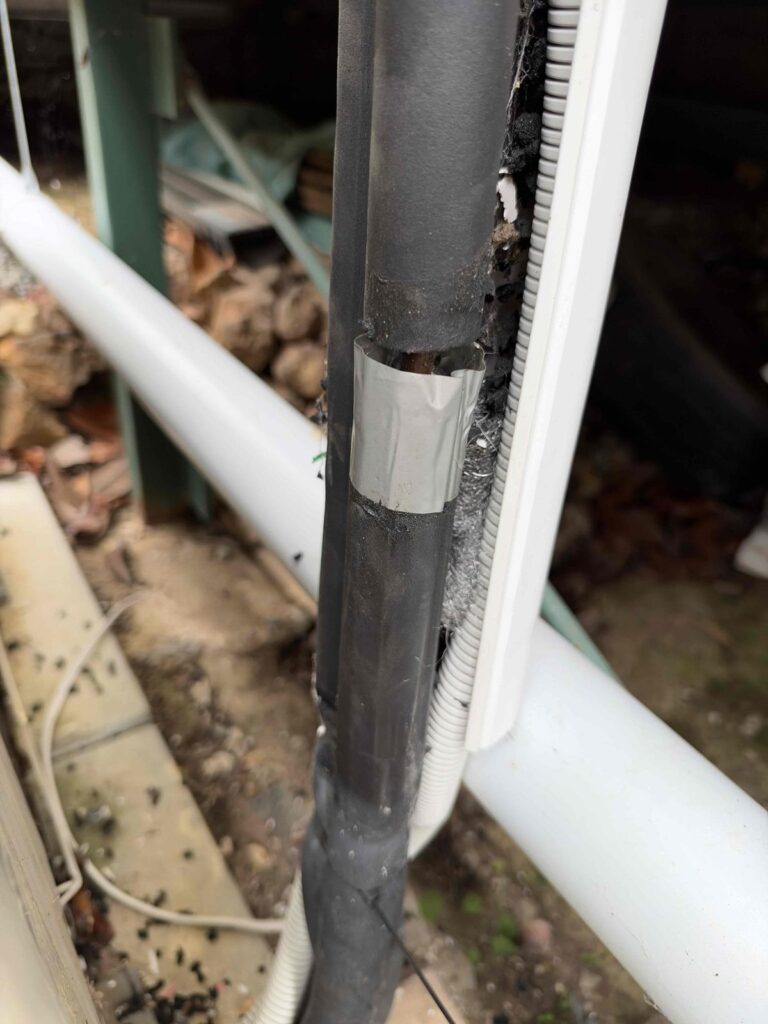
The customer contacted us after their reverse cycle system stopped working entirely. On inspecting the exterior, they found the wires running from the outdoor unit had been chewed and shorted at the roof line. They asked us to repair the wiring and assess the system for any other damage.
Our technician confirmed the damage on the first visit. The interconnecting cables, which carry control signals between the indoor and outdoor units, were damaged at the roof line and needed to be fully re-run. The outdoor control PCB also required replacement. The quote, titled “Bandaid Repairs,” covered both items. No additional faults were found on the first visit or during the repair.
What We Tested
On the first visit we inspected the interconnecting cables and the outdoor control PCB. When wiring damage is reported at an outdoor unit, the standard scope is to trace the damage, assess what the short circuit may have affected downstream, and quote all work before any repairs begin.
Interconnecting cables. The interconnect cable runs between the indoor and outdoor units of a reverse cycle system, carrying the low-voltage control signals that allow the indoor controller to communicate with the outdoor unit. The cables had been chewed at the roof line and shorted. Given the location and extent of the damage, they needed to be fully re-run rather than spliced.
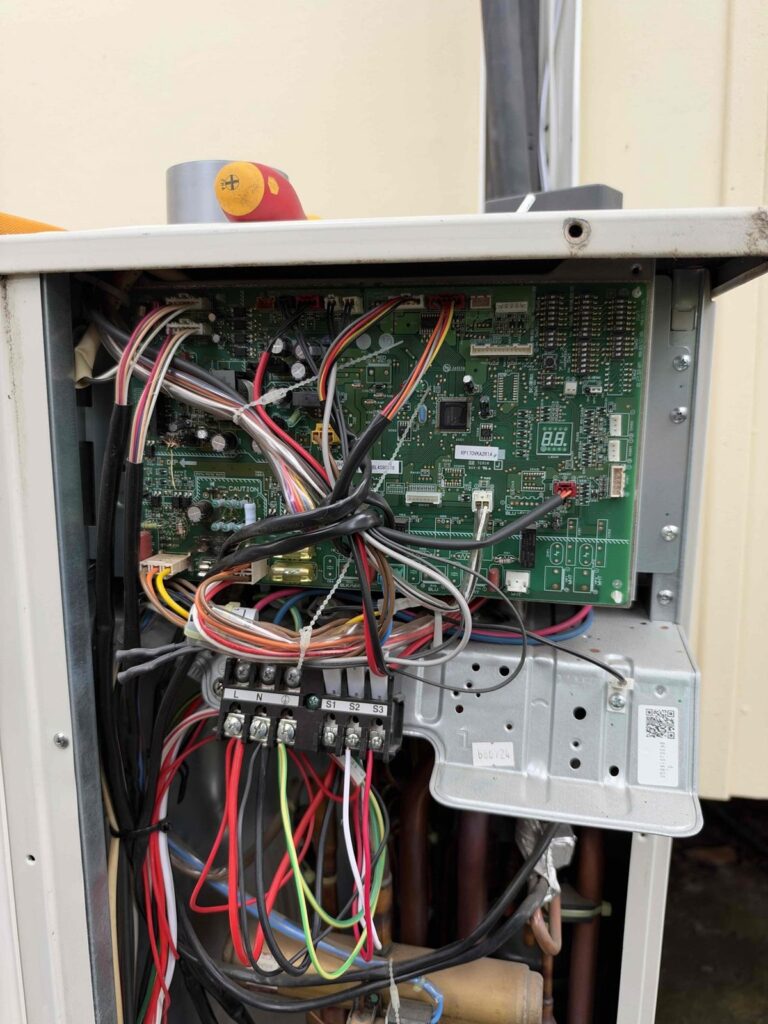
Outdoor control PCB. The outdoor unit control board manages the compressor, the outdoor fan motor, protection circuits, and in a reverse cycle system, the reversing valve that switches the unit between heating and cooling. A short circuit in wiring connected to this board can send incorrect voltages through the board components. We found the PCB required replacement, and we sourced the correct genuine replacement board.
The roof line is a recognised vulnerable point for this type of cable damage. An article on Vividly Aussie notes that cable entry points at outdoor units attract gnawing animals if penetrations are not sealed with rodent-resistant materials, and that foam sealants are easily chewed through, while metal mesh or conduit provides more durable protection.
How We Fixed It
The approved quote covered two items, completed on the return visit:
- Interconnecting cables re-run. Cable was supplied from van stock. The damaged section was removed and new interconnecting cable was run from the outdoor unit, through the roof line, to the indoor unit. The electrical repair was completed under a half-hour labour template. Under Australian electrical safety legislation, interconnecting cable work on a fixed electrical installation must comply with AS/NZS 3000 and must be performed by a licensed electrical worker. Our technicians hold both refrigeration and electrical licences, so both the cable and the PCB replacement were handled in the same visit.
- Outdoor control PCB replaced. The damaged board was removed and the replacement PCB was fitted. The system was then tested on completion.
For a plain-English summary of what AS/NZS 3000 requires for air conditioning electrical work, the AS/NZS 3000 overview from CCC Engineering covers the key licensing obligations and cable selection requirements that apply to fixed installations like this one.
Summary
| Stage | What we did | What it showed |
|---|---|---|
| Diagnosis | Inspected interconnecting cables and outdoor control PCB | Cables required re-running; PCB required replacement |
| Quote | Quoted cable re-run and PCB replacement (“Bandaid Repairs”); customer approved | Both items confirmed for repair |
| Repair | Re-ran interconnecting cables; replaced outdoor PCB | Works completed as quoted |
| Testing | System tested on completion | All okay |
Key Takeaways
- Safe checks you can do yourself. If your reverse cycle system stops working, check that the isolator switch next to the outdoor unit is on, that the AC circuit breaker has not tripped at the switchboard, and that the indoor unit filters are not blocked. These checks require no tools and no opening of any panels.
- Inspect visible cables outside. Look at the cables where they run along external walls or pass through the roof line. Visible damage to cable sheathing, exposed copper, or obvious chew marks are a reason to leave the system off and call a licensed technician rather than attempt a temporary fix.
- A short circuit can affect more than the cable. Shorted wiring can damage electronics connected to it, including the outdoor control PCB. If the outdoor unit is not responding after you have found wiring damage, the board may also need separate inspection and quoting.
- Cable penetrations benefit from rodent-resistant sealing. Where cables enter the roof space or pass through external walls, foam sealants can be gnawed through by animals seeking warmth or nesting material. Metal conduit or mesh provides better long-term protection. This is worth checking at your next annual service.
- Fixed wiring repairs are licensed work. Interconnecting cable replacement on a reverse cycle system is fixed electrical work and must be performed by a licensed electrical worker under AS/NZS 3000. DIY repairs on mains-connected equipment may void the system warranty and will not pass a safety inspection. For domestic electrical repairs, use a licensed tradesperson.
The Resolution
Both quoted items were completed on the return visit. The interconnecting cables were re-run and the outdoor control PCB was replaced. The system was tested and confirmed all okay. No further work was found or recommended during the repair.
If your reverse cycle system has stopped working and you are not sure whether the fault sits with the air conditioning system or the fixed wiring, we can assess both in a single visit. Our air conditioner repairs and domestic electrical repairs pages have more detail on what each service covers.
“When wiring is damaged in a roof space, the visible damage is rarely the whole story. We inspect what the cable connects to before we quote the repair.” Oliver Hastings, T&K Airpower
This job was in Blackwood. We look after homes right across the City of Mitcham: see air conditioning repairs in Mitcham.
Frequently Asked Questions
What happens when the interconnect cable on a reverse cycle air conditioner is chewed through?
The system will typically stop working entirely, as the cable carries control signals between the indoor and outdoor units. If the cable has shorted, there is also a risk of damage to the outdoor control PCB. Both need to be inspected before a repair is quoted.
Can I splice or tape a chewed air conditioner interconnect cable myself?
No. Interconnecting cable work on a fixed electrical installation must be carried out by a licensed electrical worker under Australian electrical safety legislation and AS/NZS 3000. An unlicensed repair may void the system warranty and will not pass a safety inspection. Our domestic electrical repairs team handles this type of work.
How much does it cost to repair chewed air conditioner wires and a damaged control board in Adelaide?
Costs depend on what has been damaged. The work in this job, covering interconnecting cable replacement and an outdoor PCB replacement, was priced at about $1,000 to $1,500 inc GST (correct at 19 October 2026). We charge a $199 diagnostic fee for reverse cycle fault-finding, which covers the site visit and inspection.
What does the outdoor control PCB do, and why is it replaced rather than repaired?
The outdoor PCB manages the compressor, the outdoor fan motor, protection circuits, and in a reverse cycle system, the reversing valve that switches the unit between heating and cooling. When the board is damaged by a short circuit, individual tracks and components are typically burned and are not recoverable. Replacement with the correct manufacturer part is the standard repair.
How do I stop animals from chewing my air conditioner cables?
Ensure cable penetrations through the roof line or external walls are sealed with metal conduit or mesh rather than foam sealants or soft grommets. Foam sealants are easily gnawed through. Scheduling regular air conditioner servicing also helps identify early damage before it reaches the control board.
Should I repair or replace my system after this kind of damage?
That depends on the age and condition of the system and the cost of parts available for it. In this job, repair was appropriate and was completed successfully. Our repair or replace calculator is a useful starting point. For ducted systems in particular, the cost difference between repair and replacement is significant; our ducted air conditioning guide covers the key considerations.
What is the $199 diagnostic fee and when does it apply?
The $199 fee applies to reverse cycle air conditioner fault-finding and diagnostic visits. If the fault is a standalone electrical fault unrelated to the refrigeration system, a different call-out fee may apply. We confirm the applicable fee before dispatching a technician.
Need Help?
If your reverse cycle air conditioner has stopped working and you can see damage to the wiring, call us on 08 8296 7888 or book online at tkairpower.com.au/contact-us. We inspect first and quote before any work begins. T&K Airpower has been trading since 1996, is fully licensed, and is an authorised warranty agent for Mitsubishi Electric, Temperzone and Hitachi. We repair first.

