


Written by Oliver Hastings on 23 October 2026
What Does It Mean When a Ducted Air Conditioning Return Air Duct Is Breaking Down?
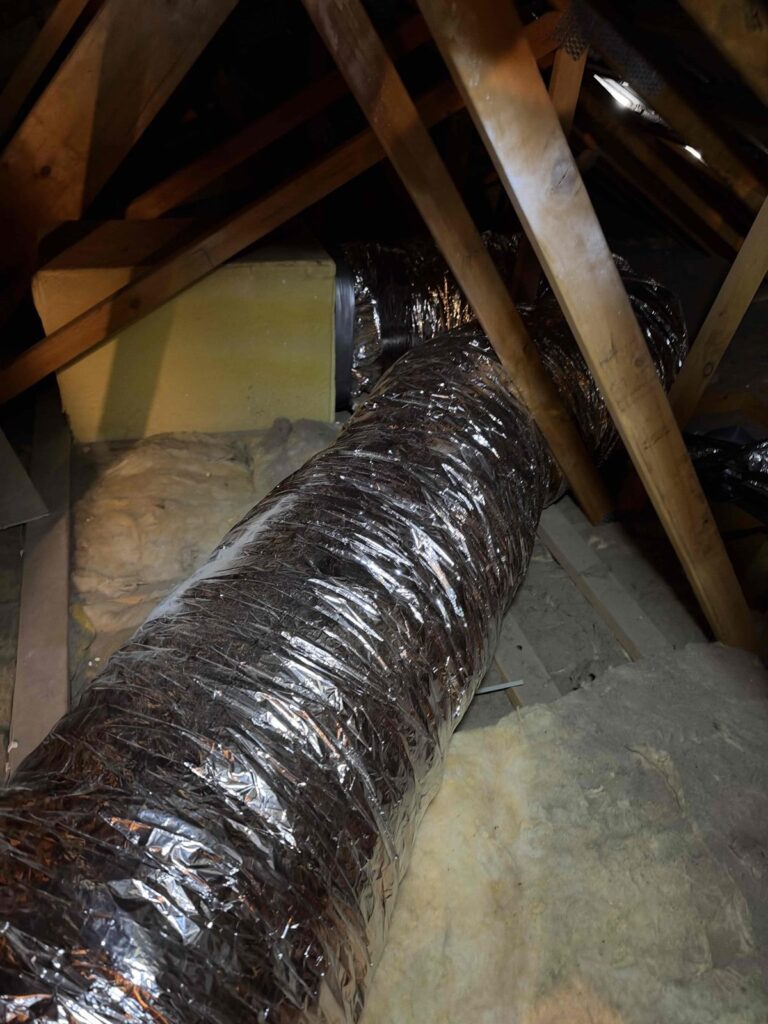
Ducted air conditioning return air duct replacement was required on a Temperzone system in Mawson Lakes after the flexible plastic duct material was found to be breaking down. The deterioration came to light during a routine coil clean, when the duct had to be removed from the indoor unit to allow access. We cut out the worst sections at the time, provided a quote, and returned to replace both return air duct runs in full.
The Job In Brief
- System: Temperzone ducted system
- Suburb: Mawson Lakes, Adelaide
- Symptom that prompted the visit: Indoor fan motors and blower wheel required replacement, along with a coil clean
- Finding during the coil clean: Return air duct plastic was breaking down; worst sections cut out on the first visit
- Fix: Two return air duct runs replaced with PLATINUM R1.0 flexible duct (400mm diameter, 6m lengths), FIREBREAK FLEX DUCT R1.0 and 400mm metal joiners
- Price guide: $1,500 to $2,000 inc GST, correct at 19 October 2026
- Outcome: Return air ducts replaced; upstairs unit also quoted for replacement at the same visit
The Fault
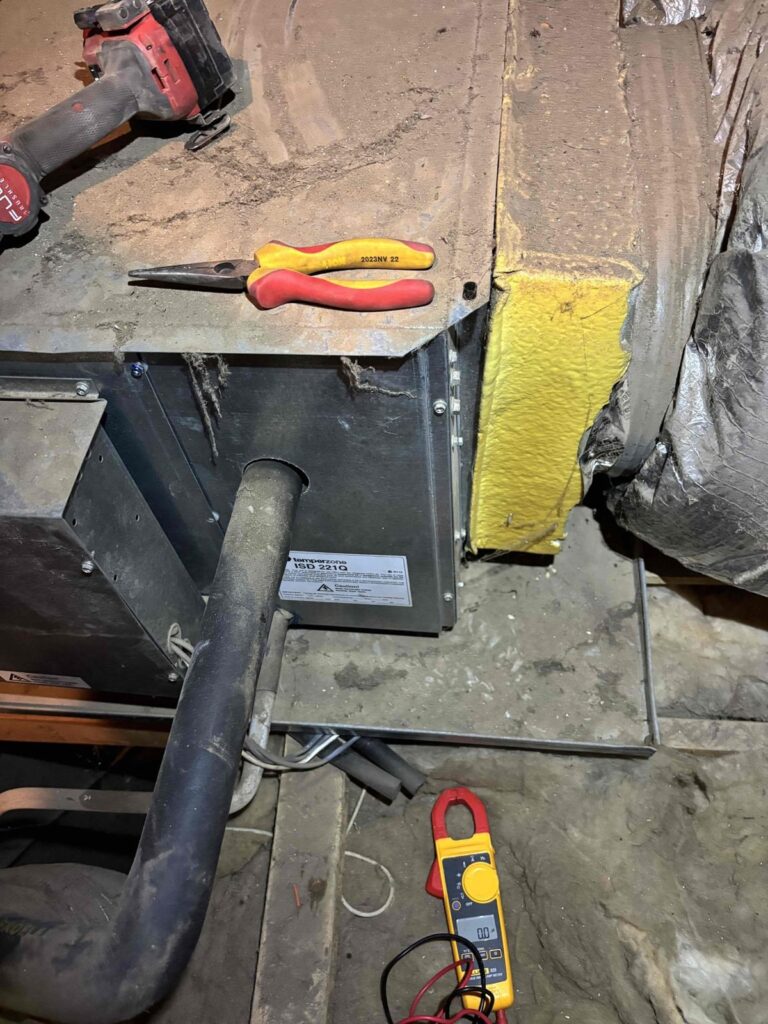
The visit was originally booked to replace the fan motors and blower wheel on the Temperzone indoor unit and clean the indoor coil. To carry out the coil clean, the return air duct had to be removed from the unit. When it came off, the technician found the plastic duct material was breaking down. The worst of the deteriorated sections were cut out at the time. The technician noted the remainder would continue to break down and sent a quote for full replacement with the invoice.
In a ducted system, the return air circuit draws room air back to the indoor unit, where it is filtered, cooled and recirculated through the supply ducts. The return duct connects the return air grille in the ceiling to the air handler in the roof space. If that duct collapses, splits or allows air to bypass it, the unit can draw unconditioned air from the roof space rather than from the living areas, reducing its ability to cool the home. More on how ducted systems work is on our ducted air conditioning page.
What We Tested
On the first visit we replaced two indoor fan motors and one indoor fan blade, then cleaned the indoor coil. After the work the unit was tested, and the fans were running well. Removing the return air duct for coil-clean access gave a clear view of its condition: the plastic was breaking down. The worst sections were cut out before the job was closed off.
On the second visit, the existing return air duct runs were fully removed to inspect the connections at the indoor unit collar and at the return air grille ends before the new duct was fitted.
An annual professional service is the most practical way to catch duct deterioration before it affects performance. The ABC’s guide to ducted air conditioning maintenance notes that ducted units should be professionally serviced on a yearly basis, with service work covering filters, ducts and registers. Our ducted air conditioning service starts at $290 and includes an inspection of accessible ductwork and connections.
How We Fixed It
Two return air duct runs were replaced using PLATINUM R1.0 flexible duct (400mm diameter, 6-metre lengths) and FIREBREAK FLEX DUCT R1.0 (6m x 400mm). Metal joiners (400mm diameter) were fitted at the indoor unit collar and at the grille end of each run to give rigid, airtight connections at both ends.
PLATINUM R1.0 flexible duct is an insulated flexible duct with a thermal resistance of R1.0. In Adelaide’s summer, roof space temperatures regularly reach 60 to 70 degrees Celsius, as documented by Energy Cut. Insulation on the return duct limits how much of that heat transfers into the return air stream. The 400mm diameter matches the return air connection on the indoor unit.
Metal joiners at each end of the flexible duct give a positive, airtight mechanical connection at the collar points that flexible duct alone cannot achieve.
Summary
| Stage | What we did | What it showed |
|---|---|---|
| Visit 1: Fan and coil work | Replaced 2 indoor fan motors and 1 fan blade; cleaned indoor coil | Fans running well after the work |
| Visit 1: Duct inspection | Removed return air duct for coil-clean access; inspected condition | Plastic duct material breaking down; worst sections cut out |
| Visit 2: Duct replacement | Removed both return air duct runs; fitted PLATINUM R1.0 flex duct | Both duct runs replaced and connected |
Key Takeaways
- Return air duct deterioration often shows no obvious symptom until the duct is physically removed during a service or repair visit. If your ducted system has gradually lost cooling performance, deteriorating ductwork is worth investigating.
- You can check the return air grille yourself: it should be unobstructed, and the filter behind it should be reasonably clean. A filter clogged with dust restricts the return air supply to the unit and makes the system work harder than it needs to.
- Adelaide roof spaces reach 60 to 70 degrees Celsius in summer. Repeated heat cycling puts ongoing thermal stress on flexible duct materials, which is one reason duct condition should be checked whenever the indoor unit is serviced.
- If the plastic jacket or inner liner of a return duct is crumbling, replacing the affected run is more reliable than patching. Leaks in the return circuit allow the unit to draw unconditioned air from the roof space, which increases running costs and reduces cooling output.
- Ductwork in the roof space should be inspected by a licensed technician. If you are unsure whether your ducts are in good condition, an annual ducted service is the practical first step.
The Resolution
Both return air duct runs were replaced on the second visit using PLATINUM R1.0 flexible duct, FIREBREAK FLEX DUCT R1.0 and 400mm metal joiners. At the same visit, the technician also quoted options for replacing the upstairs unit. Four options were presented: Mitsubishi Electric at two tiers (Better and Best recommendations), a Hitachi option and a Midea option. Those quotes remain open.
If you are weighing up whether to repair or replace your current system, our repair or replace calculator is a useful starting point.
“When we pull a return duct off a unit for a coil clean and the plastic comes away in pieces, the job has already told us what the next job is. Old ductwork in a hot roof space has a finite life, and the only way to find out where it is in that life is to look at it properly.” Oliver Hastings, T&K Airpower
This job was in Mawson Lakes. We look after homes right across the City of Salisbury: see air conditioning repairs in Salisbury.
Frequently Asked Questions
What is a return air duct in a ducted air conditioning system?
A return air duct carries room air from the return air grille back to the indoor unit, where it is filtered, cooled (or heated) and recirculated. It is the intake side of the duct circuit. Supply ducts move conditioned air out to the rooms; return air ducts bring it back.
How do I know if my return air duct is deteriorating?
Common signs include reduced airflow at supply vents, rooms that are harder to cool than usual, and unusual smells when the system runs. In most cases, deterioration inside the roof space is only visible when the duct is removed during a service or repair visit. An annual ducted air conditioning service is the most practical way to catch this before it becomes a larger problem.
Can a deteriorating return air duct affect cooling performance?
Yes. A return duct that collapses, cracks or draws unconditioned air from the roof space reduces the indoor unit’s ability to cool the home. The unit runs longer and rooms take more time to reach the set temperature. In Adelaide, where summer roof space temperatures reach 60 to 70 degrees Celsius, warm air entering the return circuit adds directly to the unit’s cooling load.
How much does return air duct replacement cost in Adelaide?
As a guide, replacing return air ductwork on a ducted system costs $1,500 to $2,000 inc GST, depending on the number of duct runs, duct diameter and roof-space access. This guide is correct at 19 October 2026. Contact us for a site assessment and a fixed-price quote.
What flexible duct is used for return air in a ducted system?
In this job we used PLATINUM R1.0 flexible duct (400mm diameter, 6m lengths) and FIREBREAK FLEX DUCT R1.0 (400mm). R1.0 refers to the thermal resistance of the insulation layer around the inner duct liner. Metal joiners at the collar connections ensure an airtight seal at each end.
Should I repair or replace a deteriorating return air duct?
If the plastic jacket and inner liner are visibly breaking down over a significant portion of the run, full replacement is generally the more reliable option. Patching a section already in advanced deterioration tends to leave the remaining material exposed to the same conditions. Our repair or replace calculator can help you weigh up the broader question for the system as a whole.
Who can replace return air ducts on a ducted air conditioning system?
Duct replacement involves working in the roof space and disconnecting the duct from the indoor unit. This is not a DIY task. Contact a qualified HVAC technician for an inspection and replacement.
Need Help?
If your ducted system is showing signs of duct deterioration, or you would like the return air circuit checked as part of a service, call T&K Airpower on 08 8296 7888 or use our online contact form.
T&K Airpower has been servicing Adelaide homes since 1996. We are authorised warranty agents for Mitsubishi Electric, Temperzone and Hitachi, and our first approach is always to repair where it is practical to do so.

