


Written by Oliver Hastings on 30 October 2026
Clumps Coming Out of a Split System: What We Found in Elizabeth Park
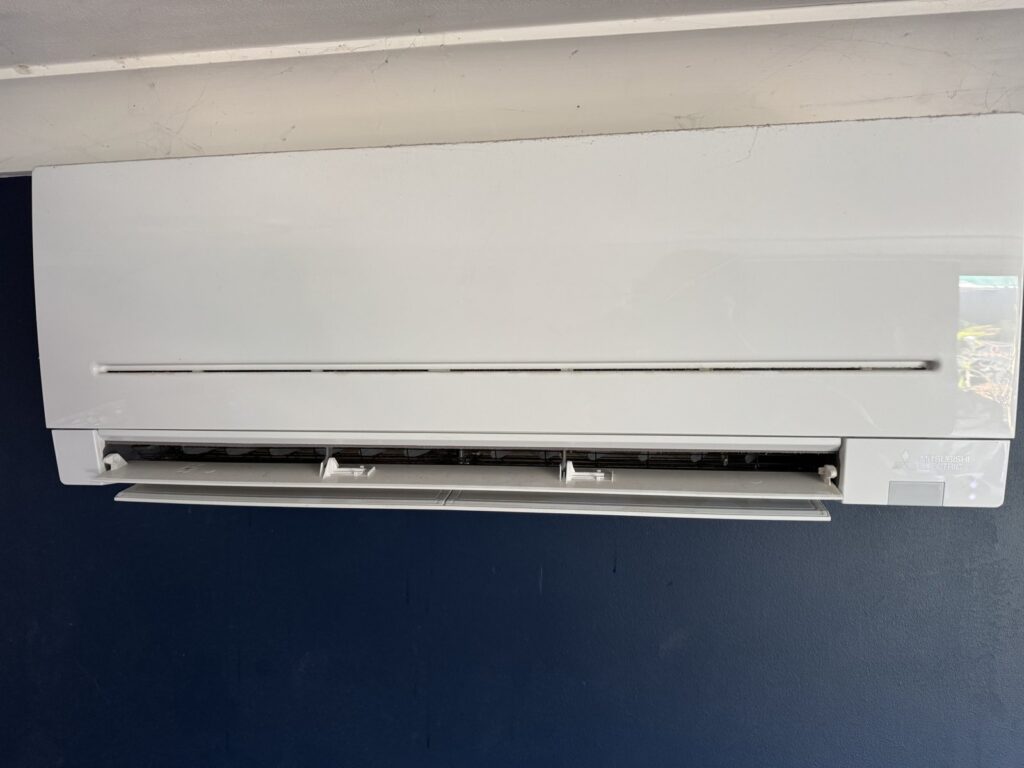
Clumps coming out of a split system are a sign the indoor unit needs a professional clean. This week we visited a home in Elizabeth Park, serviced a Mitsubishi Electric hi-wall unit, tested heating and cooling, chemically cleaned the indoor coil, and left the system found ok.
The Job In Brief
- System: Mitsubishi Electric hi-wall split system
- Suburb: Elizabeth Park, South Australia
- Symptom reported: Clumps coming out of the unit
- What we tested: Heating and cooling; indoor and outdoor unit
- Root cause: Indoor unit required cleaning
- Fix: Hi-wall indoor coil chemical clean; domestic service
- Price guide: About $500 to $600 inc GST (correct at 29 October 2026)
- Outcome: Clean and hygenic air
The Fault
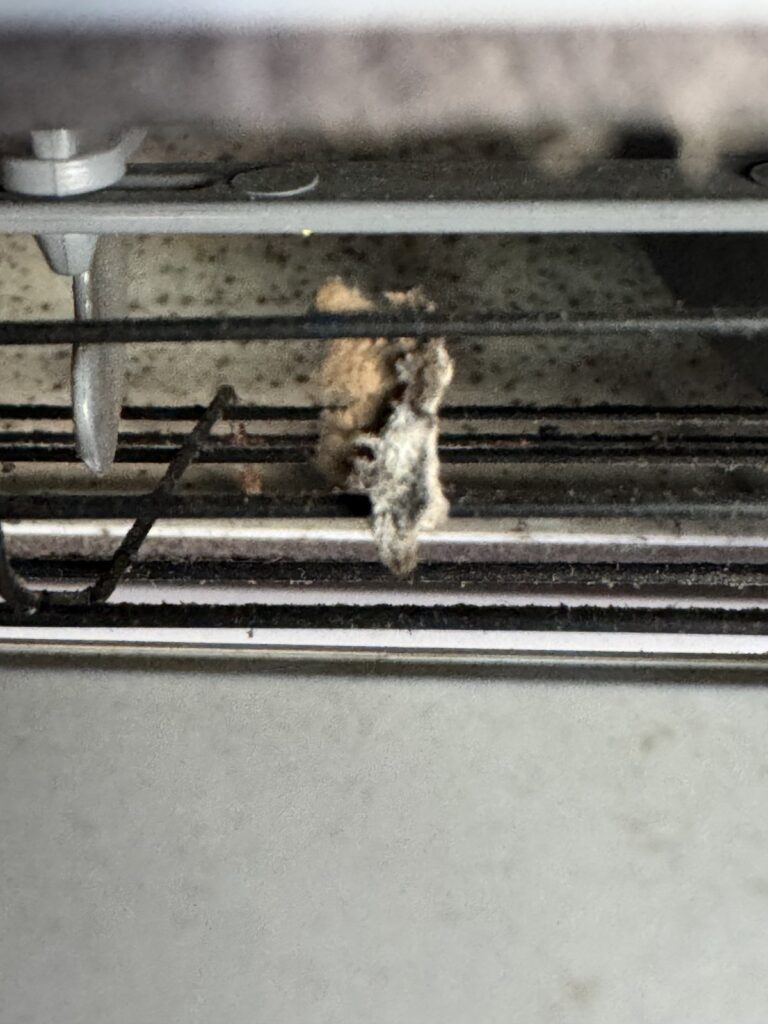
The customer booked the job as a maintenance service and reported that clumps were coming out of the indoor unit. Visible debris ejected through the louvres of a hi-wall system is a recognisable sign that the indoor unit needs professional attention. T&K Airpower handles this type of call regularly through our air conditioning repairs and servicing work across Adelaide.
Inside a hi-wall unit, warm room air is drawn across the evaporator coil, which runs cold as refrigerant passes through it. Moisture from the air condenses on the coil face during normal operation. That wet surface collects airborne dust, lint and fine organic particles over time. The barrel fan, which sits directly behind the coil in the airflow path, accumulates the same material. As this layer builds up, pieces can come loose and be carried through the louvres. A chemical clean is designed to reach the coil surface and the fan assembly in a way that routine filter maintenance cannot.
What We Tested
We tested heating and cooling and checked both the indoor unit and the outdoor unit.
Testing across both modes confirms the system is operating over its full range and provides a clear baseline before and after the cleaning work. The outdoor unit, which houses the compressor and condenser coil, is checked alongside the indoor unit as part of a complete hi-wall service. No faults were identified at the outdoor unit during this visit.
How We Fixed It
The customer approved a quote covering two items on the same visit:
- Hi-Wall Service, Domestic: a full general service of the indoor unit
- Hi-Wall Indoor Coil Chemical Clean: a professional chemical clean of the evaporator coil
The technician applied a foaming chemical cleaning agent to the indoor coil, allowed it to dwell, rinsed the unit through and carried the waste water away safely via the drain. The unit was then reassembled. A chemical clean reaches the full depth of the coil fins and the fan assembly, removing accumulated debris and biofilm that routine filter cleaning does not address. The unit was retested and found ok.
Our air conditioner service and maintenance page has more detail on what a standard hi-wall service covers. If you are weighing whether to service or replace your unit, our repair or replace calculator is a useful starting point.
Summary
| Stage | What we did | What it showed |
|---|---|---|
| Initial inspection | General service; checked indoor and outdoor unit | Indoor unit required cleaning |
| Testing | Tested heating and cooling | System operational across both modes |
| Chemical clean | Applied chemical cleaner to indoor coil; rinsed and reassembled | Found ok |
Key Takeaways
- Clumps or flakes from the louvres mean the indoor unit needs attention. The coil and barrel fan sit in a warm, wet, dusty airstream and build up contamination that eventually becomes loose enough to blow through. Stop using the unit and book a service.
- What you can check yourself: Clean the filters. On most hi-wall units the filter panel lifts out, can be rinsed under a tap and replaced once dry. Check your user manual for the correct steps for your model. Do not spray water or cleaning products into an open unit without the correct preparation, as doing so risks saturating the electrical components.
- Musty smells are an early warning. If the air from your unit smells damp or earthy when it first starts, organic buildup on the coil or in the drain pan is a likely cause. Booking a service at that point is more straightforward than waiting until visible clumps appear.
- Annual servicing helps catch buildup early. A standard hi-wall service includes a coil check, drain inspection, filter check and outdoor unit inspection. See our service and maintenance page for details on what is covered.
- Refrigerant work requires a licensed technician. A coil chemical clean does not open the refrigerant circuit and does not require a refrigerant licence. Any work involving refrigerant, such as a regas or a leak repair, must be carried out by a holder of a Refrigerant Handling Licence. Under the Ozone Protection and Synthetic Greenhouse Gas Management Regulations 1995, it is an offence to handle refrigerant without a licence in Australia. The Australian Refrigeration Council (ARC) administers these licences.
The Resolution
We completed the chemical clean, reassembled the indoor unit and retested heating and cooling. The system was found ok. No further work was identified during this visit.
It is one of Mitsubishi Electric’s wall-mounted air conditioners available in Australia. T&K Airpower is an authorised warranty agent for Mitsubishi Electric and our technicians work on these systems regularly across Adelaide. If you need a service or a repair on a Mitsubishi Electric system, see our Mitsubishi Electric repairs page.
If your system is older or a service reveals further concerns, our repair or replace calculator can help you think through the options.
“A hi-wall unit works hard through an Adelaide summer. The inside is wet, warm and dusty when the system is off, and that means buildup is routine. A regular service is the simplest way to stay ahead of it.” Oliver Hastings, T&K Airpower
This job was in Elizabeth Park. We look after homes right across the City of Playford: see air conditioning repairs in Playford.
Frequently Asked Questions
What are the clumps coming out of my split system?
Clumps or dark flakes from the louvres are typically accumulated dust, organic matter and biological buildup that has come loose from the evaporator coil or barrel fan. These surfaces sit in a wet, warm airstream and collect particles over time. When the layer becomes heavy enough, pieces come loose and are carried through the louvres. A professional chemical clean of the indoor unit removes this buildup from the coil and fan assembly.
Is it safe to keep running a split system that is blowing clumps?
It is worth stopping use and booking a service. A heavily contaminated unit can blow debris into the room air. In most cases a technician can inspect and clean the unit on the same visit. See our air conditioning repairs page or call us on 08 8296 7888.
Can I clean the inside of my split system myself?
You can clean the filters yourself. On most hi-wall units the filter panel lifts out, can be rinsed under a tap and replaced once dry. Consult your user manual for steps specific to your model. The evaporator coil sits deeper inside the casing and requires disassembly and professional foaming agents to reach safely. Attempting to rinse it without proper preparation risks water reaching the electrical components. For anything beyond filter cleaning, book a professional service.
How often does a split system need a chemical clean in Adelaide?
There is no fixed interval that applies to every unit. Usage, environment and how regularly the filters are maintained all affect how quickly the coil fouls. An annual hi-wall service gives a technician the chance to assess coil condition and carry out a chemical clean on the same visit if it is needed. In higher-use homes or dustier environments, more frequent cleaning may be appropriate.
How much does a hi-wall service and chemical clean cost in Adelaide?
As a price guide, a combined hi-wall service and indoor coil chemical clean is about $500 to $600 inc GST. That is a guide figure, correct at 29 October 2026. A standard hi-wall service without a chemical clean is $230.
Do I need a licence to clean an air conditioner coil?
A chemical clean of the indoor coil does not require the refrigerant circuit to be opened, so a refrigerant handling licence is not needed for the clean itself. Any work involving refrigerant, such as a regas or a leak repair, must be carried out by a licensed technician. Under the Ozone Protection and Synthetic Greenhouse Gas Management Regulations 1995, handling refrigerant without a licence is an offence in Australia. See the ARC frequently asked questions for more detail.
My unit is a ducted system rather than a hi-wall. Is the approach the same?
A ducted system has a separate indoor unit, typically installed in the roof space, with its own coil that can accumulate contamination over time. The cleaning method and access requirements differ from a hi-wall unit. See our ducted air conditioning page for more information, or call us to discuss a service for your system.
Need Help?
If your split system is blowing clumps, smelling musty or due for a service, call us on 08 8296 7888 or get in touch via our contact page. We carry out hi-wall servicing, chemical cleans and air conditioning repairs across metropolitan Adelaide.
T&K Airpower has traded in South Australia since 1996. We are licensed, and we are authorised warranty agents for Mitsubishi Electric, Temperzone and Hitachi. Our approach is repair first.

