


Written by Oliver Hastings on 23 October 2026
No airflow from ducted air conditioning vents in Ovingham: a failed run capacitor stopped the indoor fan
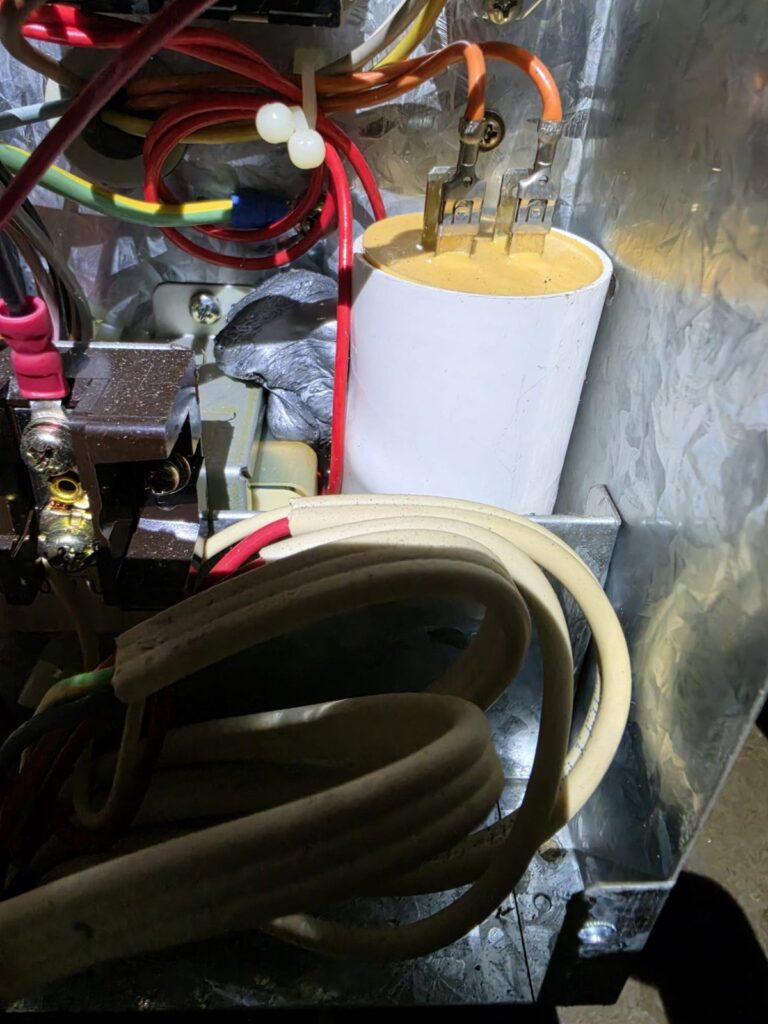
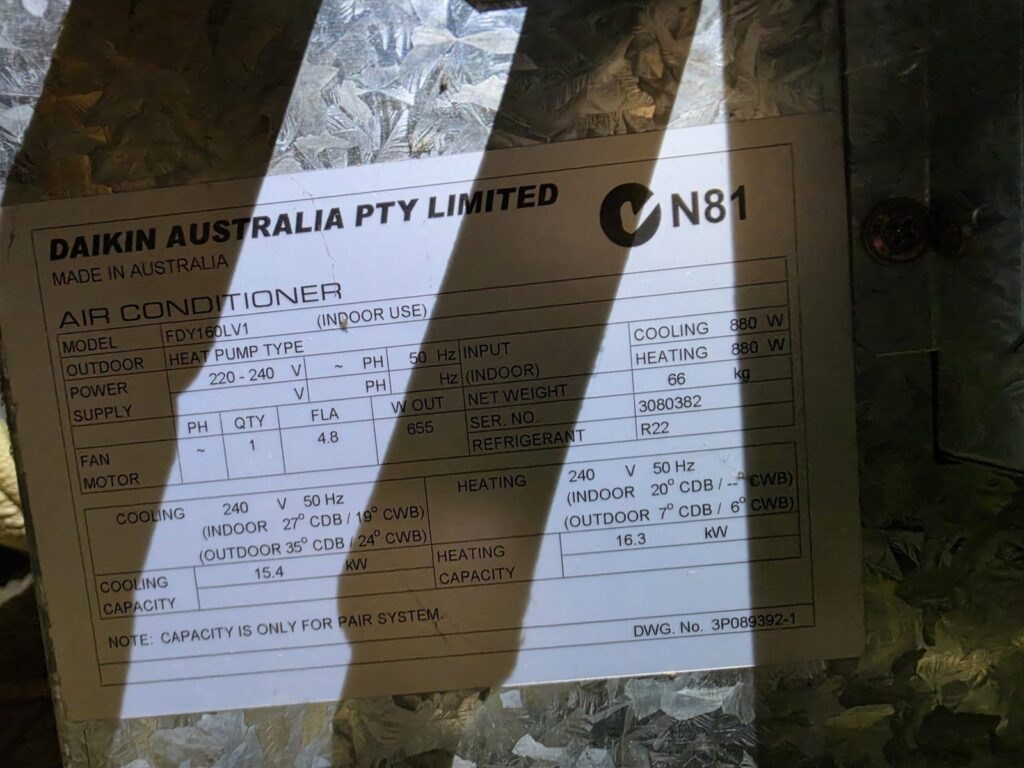
A ducted air conditioner with no airflow from the vents, even in fan-only mode, often means the indoor fan has stopped. On this Ovingham job, a failed 20 microfarad run capacitor had halted the indoor blower on a Daikin ducted system. We replaced the capacitor and serviced the unit on the same visit.
The Job In Brief
- System: Daikin ducted system
- Suburb: Ovingham, SA
- Symptom: No airflow from any vent, including in fan-only mode; outdoor unit running; wall controller operating normally
- What we tested: Unit operation, indoor fan motor, run capacitor, outdoor unit
- Root cause: Failed 20 uf run capacitor on the indoor fan motor
- Fix: Replace run capacitor; service the ducted unit
- Price guide: About $600 to $700 inc GST (correct at 19 October 2026). AC fault-finding visits carry a $199 diagnostic fee.
- Outcome: Work completed; further work quoted
The Fault
The customer booked a fault diagnosis for their ducted reverse-cycle system after noticing no air coming from any indoor vent. The wall controller was working normally and the outdoor unit was running, but in both cooling and fan-only mode, nothing came through the vents. The system was also reported as overdue for a service.
That combination points to the indoor side. The outdoor and indoor units have separate controls, so the outdoor unit can continue running even when the indoor blower has stopped. Our technician tested the unit and confirmed the indoor fan was not running.
What We Tested
With the indoor fan confirmed as stopped, we checked the fan motor and the run capacitor.
The run capacitor is an electrical component that provides continuous support to the fan motor during operation. It stores and releases electrical energy to keep the motor turning. Without a functioning capacitor, the motor loses that support and may hum without turning, run sluggishly, or stall entirely.
Testing showed the capacitor had failed. Run capacitors have a finite service life, declining as heat and operating hours cause their internal chemistry to break down. This unit was estimated at 15 to 20 years old. In that age range, capacitor failure is a known wear pattern, particularly in ducted systems where roof-space heat adds to the load on electrical components over time.
We also checked the outdoor unit. The outdoor fan motors had bearing noise. Bearing noise in a fan motor is a grinding or squealing sound produced when the internal lubrication has degraded and the bearings are running with increased friction. A bearing-worn motor works harder and runs hotter, and left unaddressed, can place additional strain on the compressor.
How We Fixed It
We replaced the failed 20 uf run capacitor and completed a full ducted service on the unit. Replacing the capacitor restored the indoor fan motor. The ducted service covered the standard checks and cleaning that form part of annual maintenance.
Replacing internal electrical components in an air conditioning system is electrical work that must be carried out by a licensed technician. Work involving the refrigerant circuit also requires an ARCtick licence issued by the Australian Refrigeration Council, the government-authorised body that manages refrigerant handling across Australia. You can confirm a business or technician holds a current licence at arctick.org, or read about what the licence covers in the ARCtick licence FAQ.
The price guide for this repair, run capacitor replacement and ducted service combined, is about $600 to $700 inc GST, correct at 19 October 2026. AC fault-finding visits carry a $199 diagnostic fee. More detail on our air conditioner repair work is on our website.
| Stage | What we did | What it showed |
|---|---|---|
| Initial test | Tested unit operation | Indoor fan not running |
| Motor and capacitor check | Checked fan motor and run capacitor | Run capacitor had failed |
| Outdoor inspection | Inspected outdoor unit | Bearing noise on outdoor fan motors |
| Repair | Replaced 20 uf run capacitor | Indoor fan restored |
| Service | Completed ducted service | Unit serviced |
Key Takeaways
- No air from any vent points to the indoor fan. If the outdoor unit is running normally but no air comes through the vents, the indoor blower motor or its capacitor is where to look first.
- Listen at startup. A ducted system in good condition produces a clear airflow sound within a few seconds of starting. A hum with no airflow, or complete silence from the vents while the outdoor unit runs, is worth having checked.
- There are safe checks you can do yourself. Confirm the wall controller is set correctly and that no zone is set to zero. Check that the return air grille is not blocked. Check your isolator switch and circuit breaker. Do not open the unit or handle internal components.
- Bearing noise is a warning, not background noise. A grinding or squealing sound from the outdoor unit indicates wear in the fan motor bearings. Having it assessed early is less expensive than leaving it.
- Annual servicing reduces the likelihood of failure under load. A routine ducted service includes checks that can identify components showing early wear before they fail entirely.
The Resolution
The run capacitor was replaced and the unit was serviced. The indoor fan was restored as a result of the capacitor replacement.
Two further matters were noted during the visit. The outdoor fan motors have bearing noise, and we quoted for outdoor fan motor replacement as a separate optional item. Given the system’s estimated age of 15 to 20 years, our technician also recommended considering replacement over further repair. Quotes for three replacement system options, Mitsubishi Electric (two specifications) and Hitachi, were provided alongside optional add-ons. These quotes remain open. The repair or replace calculator on our website can help work through the numbers.
Outcome recorded: work completed and quote sent.
“Catching bearing noise early is almost always the better call. A worn motor bearing is a straightforward repair. The same motor after it has loaded up the compressor is a different conversation.”
Oliver Hastings, T&K Airpower
Frequently Asked Questions
Why is there no airflow from my ducted air conditioner vents?
The most common cause is the indoor blower motor not running. This can result from a failed run capacitor, a faulty motor, or in some cases a tripped safety switch. If the outdoor unit is running and the controller shows normal but no air comes from any vent, the indoor fan side is where to start. A technician can test the motor and capacitor during a fault-finding visit.
Can the outdoor unit keep running if the indoor fan has stopped?
Yes. The outdoor and indoor units have separate control circuits, so the outdoor unit can continue running even if the indoor blower has stopped. That is why it can appear the system is operating normally while no air reaches any room.
What does a run capacitor do in a ducted air conditioner?
A run capacitor stores and releases electrical energy to keep the fan motor turning smoothly and efficiently throughout its operation. Without it, the motor loses the support it needs to maintain speed, and may hum without starting or stall during use.
How long does an air conditioning run capacitor last?
Service life varies depending on operating conditions, but run capacitors typically decline after many years of use. Heat accelerates the ageing process, so units in roof spaces tend to see earlier component wear than units in more sheltered positions.
What does bearing noise in an outdoor fan motor mean?
A grinding or squealing sound from the outdoor unit often indicates worn bearings in the fan motor, caused by degraded internal lubrication. A bearing-worn motor works harder and runs hotter. Left unaddressed, it can place additional strain on the compressor. It is worth having it assessed before it progresses.
Should I repair or replace a ducted system that is 15 to 20 years old?
Age alone does not settle the question, but it does change the calculation. If the repair cost is a significant fraction of a replacement system, or if several components are approaching end of life, replacement may prove better value over time. Our repair or replace calculator can help you work through the numbers.
How often should a ducted air conditioner be serviced?
A ducted system benefits from a professional annual service, ideally before the peak season. Routine servicing covers checks that can catch components showing early wear before they fail at an inconvenient time.
Need Help?
If your ducted air conditioner is not moving air, call us on 08 8296 7888 or book online. T&K Airpower has been servicing Adelaide homes since 1996. We hold ARCtick and electrical contractor licences and are authorised warranty agents for Mitsubishi Electric, Temperzone and Hitachi. We diagnose first, confirm the cost before we start, and recommend repair where it makes sense.

