
When to Call an Electrician for Electrical Fault Finding and Repairs
If you’ve ever had lights flicker, a circuit breaker trip, or a power point stop working, you’ve experienced an electrical “fault” in some form. The tricky part is that people often mix up fault finding (diagnosing the issue) with repair (fixing what’s been diagnosed). In reality, they’re two different stages of the same job, and knowing the difference helps you act faster, avoid repeat problems, and keep your home safe.
This guide breaks down what each term means, why they’re commonly confused, and the clear signs it’s time to call a licensed electrician (especially before a small issue becomes a bigger, more expensive one).
“Don’t learn safety by accident.“, Jerry Smith, was an American professional football player
What “Electrical Fault Finding” Actually Means (With Examples)
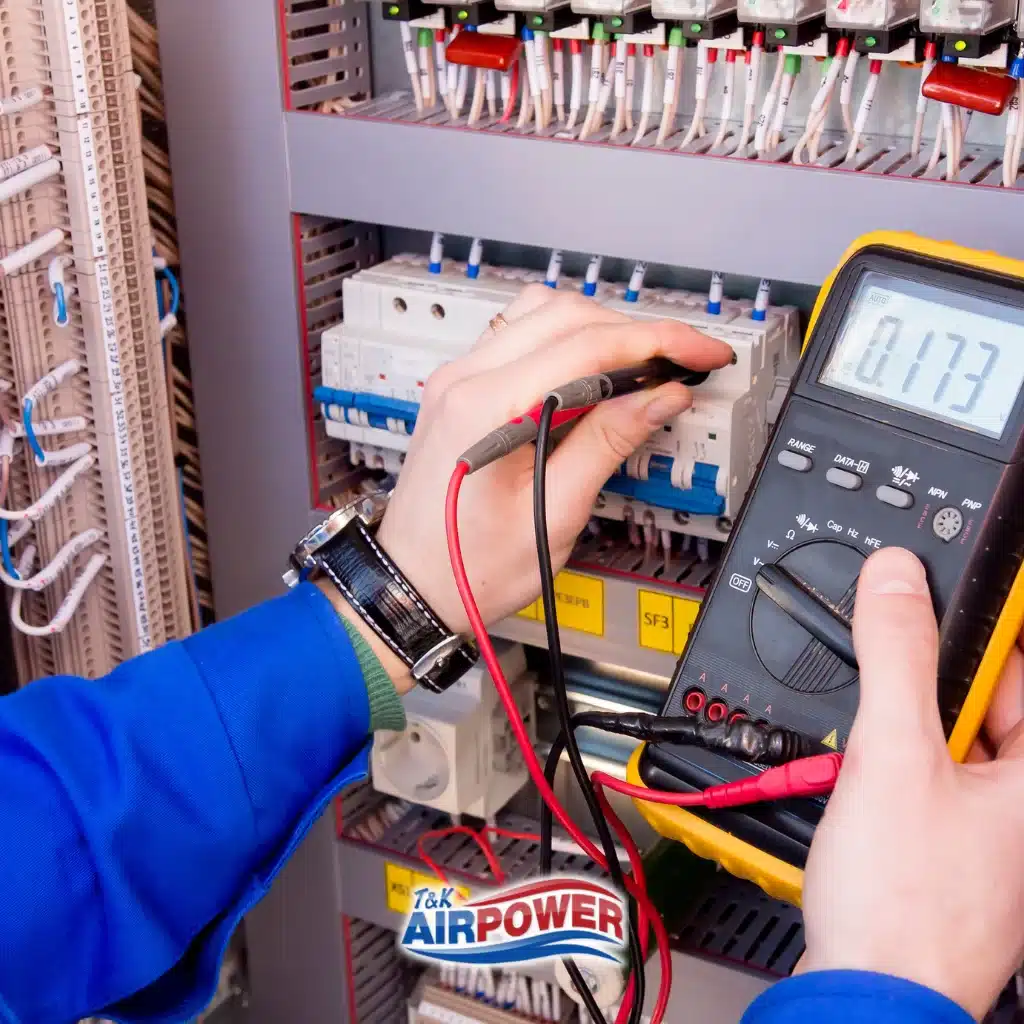
Electrical fault finding is the investigative phase. It’s the structured process a licensed electrician uses to identify the root cause of an electrical issue.
That matters because the symptom you notice is rarely the true cause. For example:
- Symptom: “The breaker keeps tripping.”
Could be: An overloaded circuit, a failing appliance, moisture ingress in outdoor wiring, a damaged cable, or a deteriorating breaker. - Symptom: “One room’s power points stopped working.”
Could be: A tripped safety switch, a loose connection, a failed outlet, a fault in a junction, or a damaged cable in the wall. - Symptom: “Lights flicker when the air conditioner starts.”
Could be: Voltage drop from a high-start load, an undersized circuit, a loose neutral, a switchboard issue, or a failing component in the unit’s electrical supply.
Fault finding is about testing, isolating, and confirming. A good electrician won’t guess, they’ll verify.
What “Electrical Repair” Means (And Why It’s Not the Same Thing)
Electrical repair is the corrective phase. Once the fault has been identified, repair is the work that restores safe, compliant operation.
Repairs might include:
- Replacing a damaged power point or switch
- Tightening or re-terminating loose connections
- Replacing a faulty breaker, safety switch (RCD), or isolator
- Repairing or replacing wiring affected by heat, pests, moisture, or age
- Correcting an overloaded circuit (e.g., redistributing loads or upgrading circuit capacity)
- Fixing switchboard faults or components that are failing under load
In other words:
- Fault finding answers: “Why is this happening?”
- Repair answers: “What do we do to fix it properly?”
When the “repair” happens without proper fault finding, you risk paying twice, because the symptom returns.
Why These Terms Get Confused
Most homeowners only see the visible issue, like a dead outlet or a tripping breaker, and understandably want it “fixed.” But electrical faults can be intermittent, load-related, or hidden behind walls and ceilings. That’s exactly why fault finding exists: it’s the difference between patching a symptom and solving the cause.
A classic example is repeatedly resetting a breaker. If it trips again, something is telling you, “This circuit is not safe as-is.” The “fix” is rarely the reset, it’s the diagnosis and repair that follows.
The Clear Signs You Should Call an Electrician
Some electrical problems are urgent. Others are early warnings. Both deserve attention.
Call immediately if you notice any of these red flags
- Burning smells, scorching, or discoloration around power points or switches
- Buzzing, crackling, or sizzling sounds from outlets, switchboards, or lights
- Warm or hot outlets/switches (heat is a major warning sign)
- Electric shocks or tingles from appliances, taps, or metal surfaces
- Smoke, sparking, or visible arcing
- Safety switch (RCD) trips that won’t reset, or trips repeatedly without a clear reason
These symptoms can indicate serious hazards such as arcing faults, insulation breakdown, or overheating connections, issues that should not be ignored.
“Stay calm, have courage, and watch for signs.“, Craig Johnson, an American author
Call soon if problems keep repeating:
- Frequent breaker trips (especially when using the same appliance)
- Flickering lights across multiple rooms
- Power points that work “sometimes”
- A single circuit keeps failing (e.g., kitchen outlets or outdoor power)
- Unexplained appliance failures (can point to voltage issues)
Intermittent faults are frustrating, but they’re also a strong sign that proper fault finding is needed.
Quick Guide: Common Symptoms vs. Likely Causes (And What to Do)
| What You Notice | What It Might Mean | Why It Matters | What To Do Next |
|---|---|---|---|
| Breaker trips when you turn something on | Appliance fault, overload, short circuit, failing breaker | Fire risk if the underlying fault worsens | Stop using the appliance/circuit and book fault finding |
| Lights flicker in multiple rooms | Loose connection, neutral issue, supply issue | Can damage appliances and create heat at connections | Call an electrician promptly (don’t wait) |
| One outlet is dead but others work | Loose termination, failed outlet, upstream connection | Can worsen into arcing/overheating | Have it tested and repaired |
| Burning smell near a switch/outlet | Overheating connection or arcing | High fire risk | Turn off power (if safe) and call urgently |
| RCD/safety switch trips randomly | Moisture ingress, faulty appliance, wiring insulation breakdown | Safety device is doing its job, something is unsafe | Arrange structured fault isolation and repair |
| Power surges or frequent blown globes | Voltage irregularities, poor connections | Can shorten appliance lifespan | Electrical inspection + fault finding |
“Can I Just Replace the Switch/Outlet Myself?”
In Australia, electrical work is not a DIY category, there’s a reason it’s licensed. In fact, according to the blog, Why Hiring a Professional Electrical Service is Essential for Your Home, electrical work is not something to be taken lightly. Even when something looks simple (like a power point), the risk sits behind the faceplate: wiring condition, earthing integrity, load demands, and compliance requirements.
If you’re tempted to “quick fix” something, it’s usually a sign you should book fault finding instead. You’ll get certainty, safety, and a repair that lasts.
What a Good Fault Finding Visit Should Look Like
While every job differs, quality fault finding generally includes:
- Asking when the fault happens (time of day, weather, specific appliances, high-load events)
- Inspecting and testing key points: outlets, circuit protection, switchboard, and affected loads
- Isolating the fault by methodically ruling out appliances, circuits, and connections
- Explaining the cause in plain English
- Recommending a repair that addresses the root issue, not just the symptom
This matters even more in homes with high-demand equipment like air conditioning. Load-related faults can present as flickering, tripping, or intermittent shutdowns, especially when a system starts under heavy demand. When the fault occurs, according to the blog Electrical Fault Finding and Maintenance, there is a surge in electrical current that flows through the network or device which causes damage to the item with potentially life-threatening results.
Adelaide Homes: Why Timing Matters
Adelaide’s temperature swings and heavy seasonal air conditioning use can expose electrical weaknesses such as loose connections, tired switchboard components, or circuits operating right at their limits. The earlier you investigate, the more likely the fix is straightforward (and less likely you’ll be dealing with a sudden failure when you need power most).
If you’re in Adelaide and want the job handled by a team that’s used to diagnosing complex issues, including faults connected to air conditioning systems and high-load circuits, T&K Airpower is a local specialist that does both electrical fault finding and repairs alongside their air conditioning expertise. You can book an appointment to get your electrical system inspected.
FAQs
What is electrical fault finding and repair?
Electrical fault finding and repair is the process of diagnosing an electrical problem (fault finding) and then fixing the cause (repair). Fault finding uses testing and isolation to identify why an issue is happening, like tripping breakers, flickering lights, or dead power points, so the repair is accurate and long-lasting.
What’s the difference between fault finding and electrical repairs?
Fault finding is the diagnostic stage: identifying the root cause of the problem. Electrical repairs are the corrective stage: replacing or fixing the faulty component, wiring, or protection device. Skipping fault finding can lead to repeat issues because the symptom gets treated, not the cause.
When should I call an electrician for electrical fault finding and repair?
Call a licensed electrician if you notice:
- Breakers or safety switches (RCDs) tripping repeatedly
- Burning smells, buzzing, crackling, or warmth around outlets/switches
- Flickering lights across multiple rooms
- Power points that work intermittently or stop working
- Tingles/shocks from appliances or switches
These are common warning signs that require electrical fault finding and repair to prevent safety risks.
Why does my circuit breaker keep tripping?
A breaker may trip due to:
- Overloaded circuit (too many appliances on one circuit)
- Short circuit (damaged wiring or faulty device)
- Faulty appliance drawing abnormal current
- Failing breaker or switchboard component
An electrician can isolate the cause through electrical fault finding and repair so it stops happening.
Why does my safety switch (RCD) keep tripping?
An RCD trips when it detects electrical leakage to earth, which can be caused by:
- Moisture in outdoor wiring or equipment
- A faulty appliance (often fridges, washers, heaters, or AC units)
- Damaged insulation in cables
- Wiring issues in outlets, lighting, or junction points
Because an RCD is a critical safety device, recurring trips should be checked with professional electrical fault finding and repair.
Are flickering lights a sign of an electrical fault?
Yes, especially if flickering happens in multiple rooms or when appliances start. Flickering can indicate:
- Loose wiring connections
- Neutral or supply issues
- Circuit overload or voltage drop
- Failing switchboard components
An electrician can confirm the cause with electrical fault finding and repair before it damages appliances or becomes a fire hazard.
Is a burning smell from a power point or switch dangerous?
Yes. A burning smell can indicate overheating, arcing, or a failing connection, issues that can lead to fire. If you smell burning near a switch, outlet, or switchboard, stop using that circuit and call a licensed electrician urgently for electrical fault finding and repair.
What happens during an electrical fault finding visit?
A typical electrical fault finding and repair appointment may include:
- Questions about when the fault occurs (time, weather, appliance use)
- Testing circuits, outlets, and switchboard protection devices
- Isolating appliances and sections of the circuit to locate the fault
- Explaining the cause clearly and recommending the safest repair
- Completing the repair immediately if parts and access allow, or quoting next steps if larger work is needed
Electrical issues often come back when the root cause isn’t found. Talk to T&K Airpower for electrical fault finding and repair that’s thorough and accurate. Book an appointment today!