
How to Find a Reliable Domestic Electrician Near You
Domestic electrician searches usually happen when something feels urgent: a tripping switch, burning smell, dead power points, flickering lights, or a renovation deadline. And because electrical work is safety-critical, “near you” shouldn’t be the only filter. The goal is simple: find someone licensed, experienced, responsive, and transparent, so the job is done once, done right, and documented properly.
“Safety isn’t expensive, it’s priceless.“ – Jerry Smith, was an American professional football player
Below is a practical, step-by-step way to find a reliable domestic electrician near you (especially relevant for Adelaide and South Australia), plus a plain-English guide to the electrical terms many homeowners get tripped up by.
1) Start with a shortlist you can actually trust
A good domestic electrician will have a steady stream of repeat customers. Your job is to find them quickly without gambling on the cheapest ad.
Better places to look than “whoever pops up first”:
- Personal referrals: Ask neighbours, family, your builder, or your property manager who they’d call for their own home.
- Local reviews with detail: Look for reviews that mention the exact job (switchboard upgrade, fault finding, new circuits, smoke alarms), not just “great service.”
- Brand/manufacturer networks: If your issue is connected to equipment (e.g., air conditioning electrical faults), it’s often safer to use a specialist service company familiar with that category of work.
- Consistency signals: A proper website, clear services, and straightforward booking process usually point to an established operator.
Tip: If you’re calling 3 businesses, you’re not “shopping around”, you’re reducing risk.
2) Verify licensing and ask for compliance paperwork
In South Australia, you can check whether a person or business is licensed using the government’s public register. Also, the Office of the Technical Regulator (OTR) is the key body that monitors and regulates electrical safety and technical standards in SA.
What to ask for (and why it matters)
- Licence details: A reliable domestic electrician won’t hesitate to provide licence information you can verify.
- Certificate of Compliance (SA: eCoC): After many electrical jobs, you must be issued an electronic certificate of compliance (eCoC), which confirms the tradesperson is correctly licensed and the work has been tested and meets standards.
If someone avoids the paperwork conversation, walk away.
3) Ask the right questions before you book
A trustworthy domestic electrician will answer clearly and won’t pressure you.
Questions that reveal professionalism fast:
- “What’s your call-out fee and what does it include?”
You want clarity: diagnosis time included? travel? first hour? - “How do you diagnose the fault?”
Listen for a method (testing, isolating circuits, checking loads), not guesswork. - “Will you provide a written quote and explain options?”
Good electricians offer the safe fix, then alternatives (e.g., repair vs replace a faulty component). - “What warranty do you provide on labour and parts?”
Get this in writing. - “Will I receive a certificate of compliance if required?”
In SA, eCoCs are emailed (or printed if needed).
“Asking questions were the most important thing.“, Franz Kafka, was a German-language Jewish Czech writer and novelist
4) Use this reliability checklist (save it for every job)
| What to Check | Why It Matters | What “Good” Looks Like |
|---|---|---|
| Verified license | Safety + legal compliance | You can confirm details via the SA register |
| Clear diagnosis approach | Prevents “replace everything” upsells | Talks testing, fault isolation, and evidence |
| Upfront pricing | Avoids surprise invoices | Fixed price before the job starts |
| Compliance documentation | Protects you and future buyers | Provides eCoC where required |
| Professional communication | Predictable service | Arrival window, updates, and photos/notes if needed |
| Insurance + warranty | Reduces risk | Happy to confirm cover and workmanship warranty |
5) Common electrician terms people confuse (with examples)
This is where homeowners often get stuck, especially when comparing quotes.
“Licensed electrician” vs “electrical contractor”
- A licensed electrician is qualified and authorised to perform electrical work.
- An electrical contractor is the business entity licensed/registered to offer and coordinate that work (often employing electricians). In SA, government guidance explains the need for licensing/registration in the plumbing/gas/electrical trades and contractor requirements for those running a business.
Example: The electrician doing the work may be an employee; the contractor is the business responsible for quoting, compliance, and accountability.
“Certificate of Compliance (eCoC)” vs “invoice”
An invoice proves payment. An eCoC is legal evidence that the job was completed by correctly licensed parties and that the work was tested, safe, and meets standards.
Example: If you sell your home, do insurance claims, or need to prove work was compliant, the eCoC matters more than the receipt.
“Safety switch” vs “circuit breaker”
These are not the same:
- A circuit breaker protects wiring from overload/short circuits.
- A safety switch (RCD) helps protect people by switching off power if electricity is leaking to earth at harmful levels.
Example: If a hairdryer falls into water, an RCD can trip quickly to reduce the risk of fatal shock.
RCD vs “the power went out”
People assume any trip means “too many appliances.” Not always.
RCD trips can indicate:
- a moisture issue in outdoor circuits,
- a failing appliance,
- wiring deterioration,
- or an earth fault.
Example: Your RCD trips every time it rains, often a sign of water ingress in an exterior fitting or cable, not just “bad luck.”
“Surge protector” vs “power board”
A standard power board is just extra outlets. A true surge-protected device is designed to reduce damage from voltage spikes.
Example: If you work from home and rely on electronics, ask your domestic electrician about whole-home surge protection options (especially after storms or grid disturbances).
“Switchboard upgrade” vs “rewiring”
- A switchboard upgrade typically modernises protection devices (like RCDs) and improves safety and circuit management.
- Rewiring replaces old or unsafe cabling through the property.
Example: Upgrading the switchboard may not solve intermittent faults if the underlying wiring is brittle or damaged, your electrician should explain which is needed and why.
6) Red flags that should make you choose someone else
Avoid any domestic electrician who:
- won’t provide licence details you can verify,
- can’t explain the diagnosis process,
- gives a “too good to be true” price without inspecting/testing,
- pressures you into immediate big-ticket upgrades without evidence,
- refuses to discuss compliance paperwork (like eCoCs where required).
7) When it’s urgent (and when it’s not)
Call urgently if you notice:
- burning smell from outlets/switchboard,
- buzzing or crackling sounds,
- visible scorch marks,
- repeated tripping that you can’t link to one appliance.
If it’s a single dead power point or a one-off trip, it may be less urgent, but you still want a reliable domestic electrician near you to test it properly rather than guessing.
A practical local note for Adelaide homeowners
If you’re in Adelaide, it can be helpful to choose a team that understands how electrical issues interact with home systems like air conditioning, especially when faults involve isolators, controls, or intermittent shutdowns. Some specialist service companies also offer domestic electrical repairs, which can be convenient when the “electrical problem” is tied to HVAC equipment.
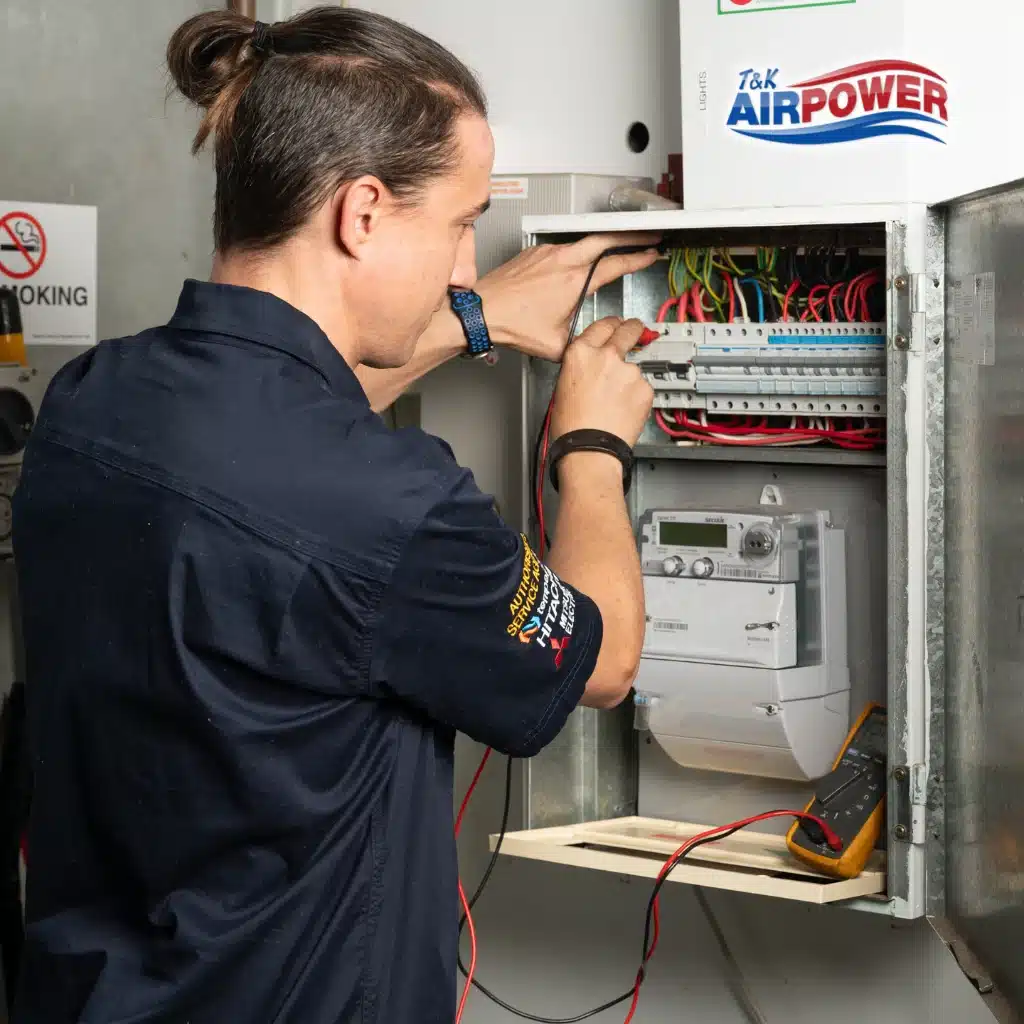
For reliable electrical repair services, book an appointment with T&K Airpower.
FAQs
How do I find a reliable domestic electrician near me?
Start by shortlisting electricians with strong local reviews, clear service information, and transparent pricing. Confirm they’re licensed, ask how they diagnose faults (not guess), and request written quotes and compliance paperwork where required.
What should I check before hiring a domestic electrician?
Check the electrician’s licence, ask if they carry insurance, confirm their call-out fees and hourly rates, and ensure they’ll provide a written quote. A reliable domestic electrician will also explain the repair options and what testing will be done before and after the work.
Do I need a Certificate of Compliance for electrical work?
In many cases, yes. A Certificate of Compliance (often issued electronically) confirms the work was completed by appropriately licensed professionals and meets safety requirements. If you’re unsure, ask your domestic electrician upfront whether your job requires compliance certification.
What’s the difference between a safety switch (RCD) and a circuit breaker?
A circuit breaker protects wiring and circuits from overloads and short circuits. A safety switch (RCD) is designed to protect people by quickly cutting power if it detects electricity leaking to earth (which can indicate a shock risk). Both devices are important, but they serve different safety purposes.
Why does my safety switch (RCD) keep tripping?
A repeatedly tripping RCD can be caused by a faulty appliance, moisture in outdoor wiring or fittings, damaged cables, or an earth leakage fault. A domestic electrician should isolate circuits and test to identify the cause rather than replacing parts blindly.
How much does a domestic electrician cost in Australia?
Costs vary by location and job type, but common charges include a call-out fee, an hourly labour rate, and parts. The best approach is to request a clear written estimate that explains what’s included (diagnosis time, travel, first hour, and any after-hours rates).
What are the biggest red flags when choosing an electrician?
Be cautious if someone won’t share licence details, won’t explain how they’ll diagnose the issue, offers an unrealistically low price without inspecting, pressures you into major upgrades without evidence, or avoids discussing compliance paperwork.
Can a domestic electrician help with air conditioner electrical faults?
Yes. Many air conditioning issues involve electrical components such as isolators, wiring, control circuits, or supply problems. If your fault is connected to HVAC equipment, consider a team experienced in both electrical repairs and air conditioning diagnostics so the issue is identified accurately and fixed properly.
If you’re tired of temporary fixes, we can help. Reach out to us at T&K Airpower and we’ll guide you through the next steps, book the right technician, and make sure the job is completed to a high standard with clear communication. Book an appointment to get started.

)